The journal can be read through a place, an ingredient or a kitchen question. A reader interested in a regional table might begin with Scandinavia, Spain or Scotland. A cook holding a basket of apples might turn instead to orchards, fruit pies and strudel. Someone puzzled by a custard that will not set can start with eggs, then compare their behavior with gelatin.
These routes overlap deliberately. Wikipedia's account of gastronomy connects food with culture, regional cooking and the practice of preparing a meal. The sociology of food opens a social perspective on food. The essays move between those perspectives while keeping the food itself in view.
Reading a recipe before cooking
Read the ingredient list and the whole method before beginning. Gather the equipment, check the pan shape and notice when something needs to cool, drain or rise. Active time means hands-on work; total time includes the waiting described in the method. A time estimate is a planning aid, while the stated texture, color or other sign helps judge the stage of cooking.
Recipes give metric and US measures together. Choose a measuring system and keep to it throughout a recipe. A kitchen scale is useful for the metric amounts. US spoons are level unless the ingredient line says otherwise; flour goes into a measuring cup without being packed down. Eggs are large unless a method specifies a different form of egg. Oven settings appear in Celsius and Fahrenheit.
Kitchen notes explain a practical choice, a way to adjust the preparation, or a detail that deserves extra care. They are part of the recipe, rather than an invitation to skip the method. Egg-based custards and ice cream point to FDA guidance. Refrigerator jam is distinguished from shelf-stable preserving, which needs tested processing directions.
Use the descriptions below to find a starting point, then follow the related links inside an essay. The opening essay sets out the larger food-culture questions. About Gastroanthropology explains the journal's scope and independence.
Places
Scandinavia: open sandwiches, brown cheese, rye and cardamom
Scandinavian foods offer contrasting uses of grain, dairy, fruit and spice. The essay explains open sandwiches, brown whey cheese, lefse and cloudberries before a recipe for cardamom buns.
Recipe: Cardamom buns.
New Nordic cuisine: foraging, seasons and a Copenhagen kitchen
Read the New Nordic manifesto alongside a Copenhagen restaurant’s role, the everyday Danish table and the idea of terroir. Rye, berries and imported spices open questions about place, continuity and invention; this essay has no recipe.
Essay; no recipe.
Scotland: cranachan, shortbread and the Burns supper
The Scottish table is explored through a poet-honoring supper and contrasting savory and sweet foods. Recipes include crisp shortbread and a brief cranachan method.
Recipe: Shortbread fingers; Cranachan.
Ireland: soda bread, dairy country and the Dingle Peninsula
Irish farmed ingredients, dairy foods and the Dingle Peninsula frame a close look at soda bread. A plain buttermilk loaf explains the practical difference between chemical raising and a long yeast rise.
Recipe: Buttermilk soda bread.
London: markets, puddings and a city that learned to eat
The London essay connects markets with English puddings and baked goods, while leaving room for culinary exchange. A strawberry Eton mess recipe uses fully baked plain meringues.
Recipe: Strawberry Eton mess.
Spain: Barcelona's Catalan table, San Sebastián's pintxos and the food of Andalusia
Spain is approached through distinct Catalan, Basque and Andalusian traditions rather than a single national dish. A recipe for pa amb tomàquet makes a practical starting point.
Recipe: Pa amb tomàquet.
Siena and Tuscany: panforte, cantucci and the Tuscan table
Tuscan bread, beans and pasta set the scene for Siena's panforte and the almond sweets of the region. A fresh almond cantucci recipe accompanies reflections on place, local food and UNESCO's cultural account of shared meals.
Recipe: Almond cantucci.
Vienna: apple strudel, Sachertorte and Wiener schnitzel
Vienna’s coffee-house culture opens a discussion of Sachertorte, Wiener schnitzel and the structure of apple strudel. The recipe teaches a stretched dough and includes a filo shortcut.
Recipe: Apple strudel with stretched dough.
German Christmas markets: Lebkuchen, Flammkuchen and the winter stalls
Trace Christmas-market customs beside Flammkuchen, Lebkuchen and the wider gingerbread family. A fresh recipe makes soft spiced honey cookies with ground almonds and an optional lemon glaze.
Recipe: Lebkuchen-style spiced honey cookies.
A travel notebook: eating along coasts, in old cities and in the mountains
The travel notebook follows Croatian coasts, filled pastries, Turkish meze, Greek island food, Moroccan tagines, Welsh cooking, Swiss dishes and Louisiana Creole traditions. Practical questions about ingredients, preparation and markets connect these regional accounts.
Essay; no recipe.
Markets & land
Food markets: Paris street markets, the market in Nice and the farmers' market revival
Markets connect growing, selling and cooking, with Paris and Nice as settings for French meals and seasonal ingredients. Squash blossoms, chestnuts and a fresh socca recipe bring those questions into the home kitchen.
Recipe: Socca in a hot skillet.
Farming and food policy: where food comes from, and who decides
The farming essay distinguishes food policy, growing systems, transport, markets and protected names. It explains what each term can say, while keeping competing concerns and limitations in view.
Essay; no recipe.
Biodynamic farming and the kitchen garden
Examine biodynamic origins, practices and criticism beside organic methods and terroir. Tomatoes, heirloom varieties and courgettes bring the discussion into the garden, followed by roasted tomato and garlic soup.
Recipe: Roasted tomato and garlic soup.
Which fish? Overfishing, the cod collapse and choosing seafood
Explore overfishing, the cod collapse and the different questions asked by seafood guides and management systems. A Mediterranean-style fish soup turns the discussion toward firm white fish, tomatoes and fennel.
Recipe: Mediterranean-style fish soup.
Bottarga: the cured roe of the Mediterranean
Bottarga connects grey mullet, regional preservation methods and the Mediterranean shared table. A spaghetti recipe uses prepared roe with lemon and olive oil, with notes on keeping the pasta loose.
Recipe: Spaghetti with bottarga, lemon and olive oil.
Cheese: milk, rennet, time and place
The cheese essay explains curds, whey, aging and protected names, with a careful account of the raw-milk discussion. A recipe makes fresh ricotta from pasteurized whole milk.
Recipe: Fresh whole-milk ricotta.
San Francisco: an ice-cream sandwich from Playland, artichokes and California cooking
Read a San Francisco ice-cream sandwich’s Playland origin beside California cuisine, artichokes and stone fruit. A generic home recipe makes oatmeal-cookie sandwiches with prepared vanilla ice cream.
Recipe: Oatmeal-cookie ice-cream sandwiches.
Baking
Bread: the baguette, sourdough, soda bread and the quick breads
Bread is read through its cultural role, the craft of the baguette and contrasting leavening methods. A banana walnut loaf provides a practical example of quick bread.
Recipe: Banana walnut quick bread.
Apples: orchards, old varieties and cider country
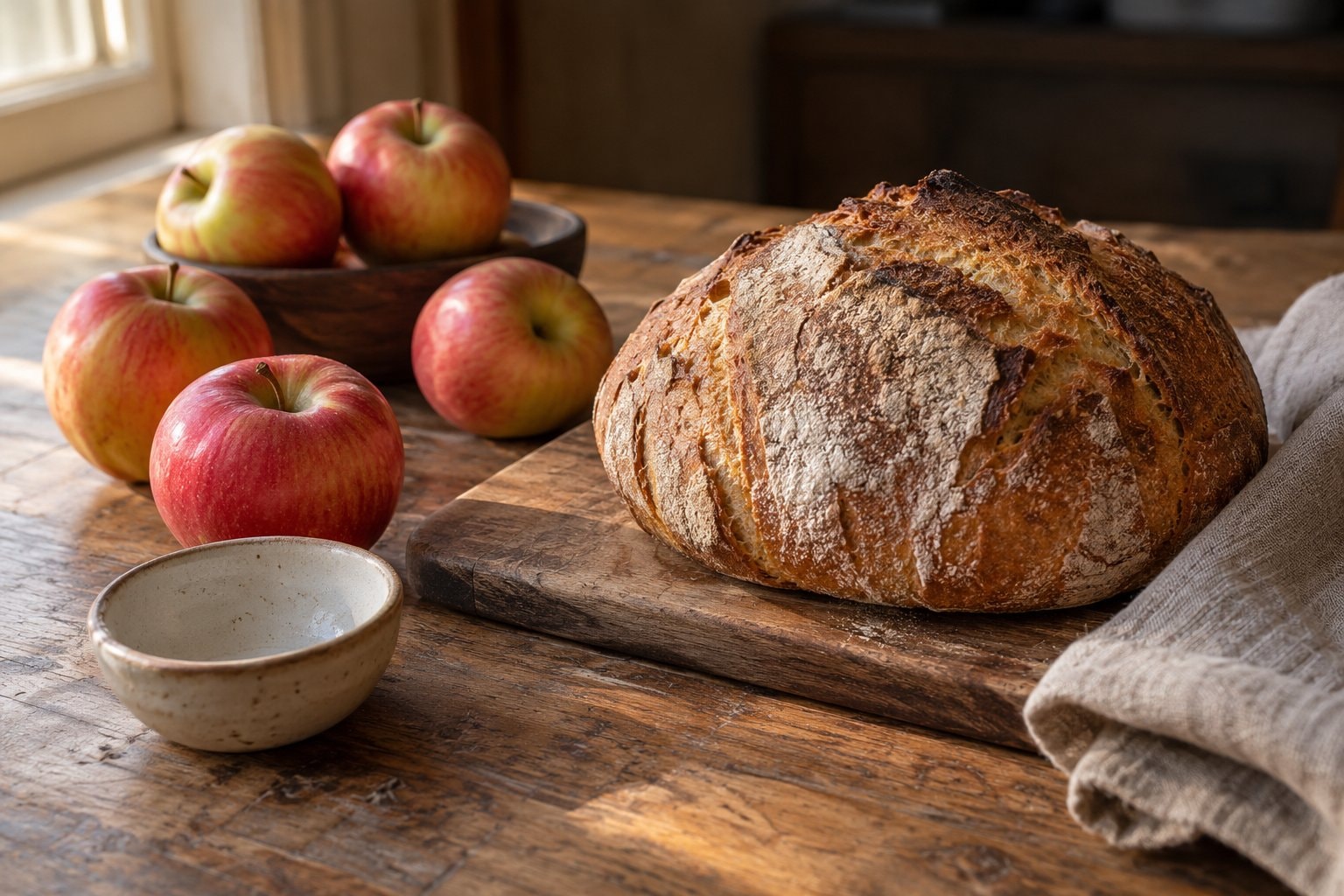
The apple essay follows cultivation, an old English variety and Normandy cider into a comparison of desserts. The recipe is an apple brown Betty with buttered crumbs.
Recipe: Apple brown Betty.
Fruit pies, grunts and crisps: sour cherries to key lime
Fruit pies, brown Betty, cobblers and grunts use different coverings to frame a filling. A sour cherry lattice pie and a short skillet peach grunt show the contrast between oven-baked pastry and stovetop dumplings.
Recipe: Sour cherry lattice pie; Skillet peach grunt.
Holiday cookies around the world
Holiday cookies reveal differences in shaping, texture and ingredients across several baking traditions. The essay ranges from ginger biscuits to madeleines and whoopie pies, then gives a cinnamon walnut snowball recipe to finish a varied plate.
Recipe: Cinnamon walnut snowball cookies.
Brown butter, caramel and chocolate: browning in the baker's kitchen
Brown butter, caramelization and Maillard browning explain different changes behind familiar baking flavors. Fresh brown-butter blondie bars and a short salted caramel sauce method put those observations to work.
Recipe: Brown-butter blondie bars; Salted caramel sauce.
Preserves: jam, marmalade and how a set happens
Jam, jelly, conserves and marmalade preserve different textures of fruit, with pectin helping form the set. A small-batch strawberry refrigerator jam accompanies the discussion of scones, cream and cake, with tested directions required for shelf-stable jars.
Recipe: Small-batch strawberry refrigerator jam.
The kitchen
The egg in the kitchen: freshness, safety and the batters it lifts
Read egg production labels and FDA safety advice alongside foams, popovers and Dutch baby pancakes. A popover recipe includes pan and oven notes, plus a brief method for a fully cooked frittata.
Recipe: Popovers.
Custards: flan, budino, clafoutis and the tonka question
Compare egg custards, clafoutis and gelatin-set panna cotta, then read the US rule on added coumarin from tonka. A hazelnut-flan recipe includes roasted strawberries and FDA egg-safety guidance.
Recipe: Hazelnut flan with roasted strawberries.
Ice cream at home: custard bases, brown-bread ice cream and frozen fruit
Ice cream joins custard cookery to the control of freezing, air and texture. A fresh brown-bread ice cream recipe uses a cooked, thickened base and FDA egg-safety guidance, with notes on mint, chocolate and fruit variations.
Recipe: Brown-bread ice cream.
Breakfast: granola, muesli, pancakes and the pumpkin season
Granola and muesli show how baking and soaking change a breakfast built around oats. The essay also considers yogurt, ricotta pancakes, winter squash and maple syrup, with a pumpkin-spice granola recipe.
Recipe: Pumpkin-spice granola.
Bones, stock and gelatin: collagen from the butcher's block to the body
Follow connective tissue from slow cooking to a chilled stock, aspic and panna cotta. A plain chicken-stock recipe sits beside a careful reading of collagen studies and their limits.
Recipe: Plain chicken stock.
Journal
Gastroanthropology: food as culture
Food can be read through growing, trading, cooking and eating together. Browse the journal by place, ingredient or kitchen question.
Essay; no recipe.
About Gastroanthropology
Gastroanthropology combines food-culture essays with practical home recipes. Its scope covers growing, markets, regional dishes and kitchen technique, supported by named references.
Essay; no recipe.