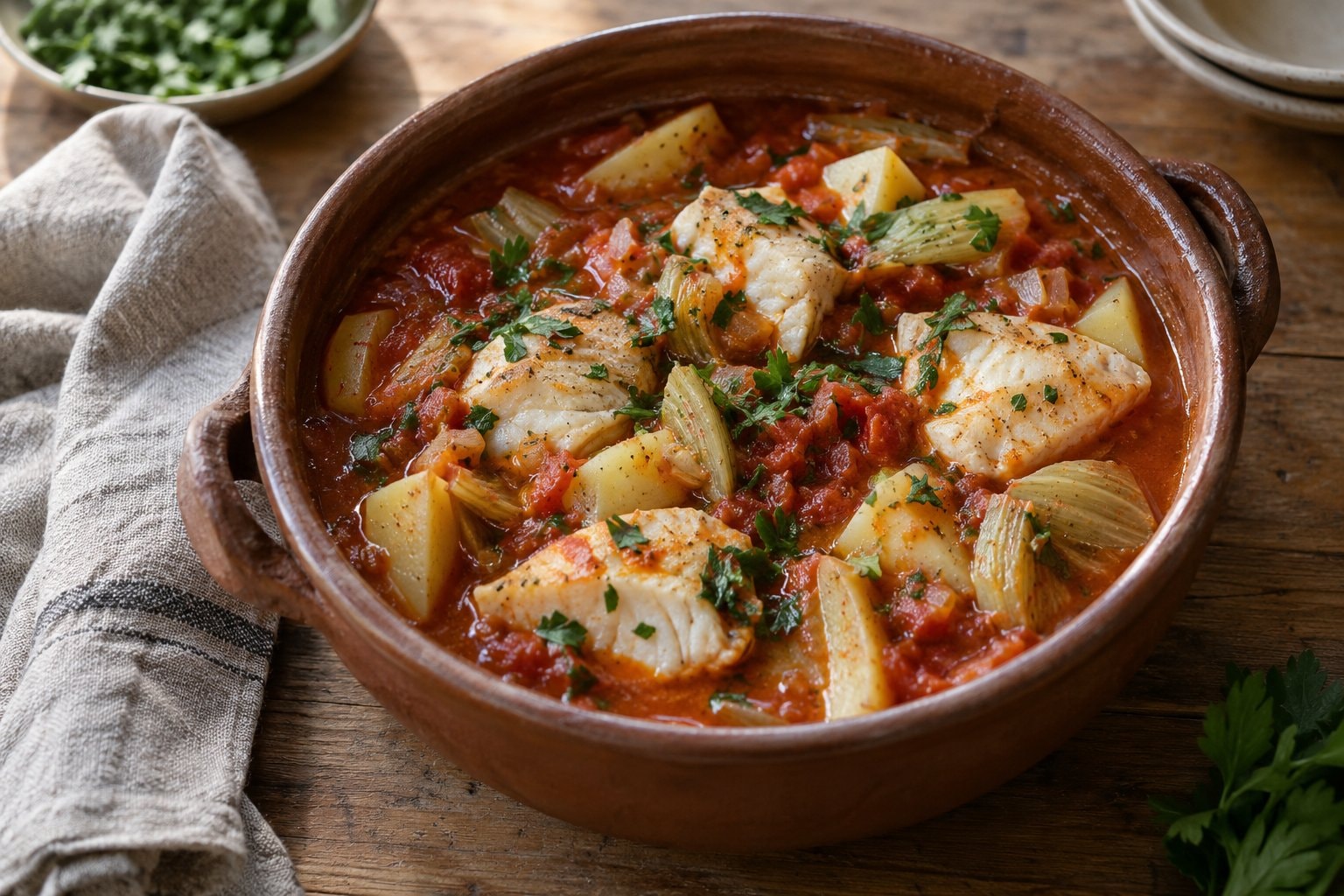
The name on a fish counter begins a conversation. It cannot finish it. A species may come from different waters, be caught with different gear and pass through different supply chains. A cooking plan adds another question: what texture is needed in the pan? Separating these questions helps a cook read the information without expecting a single word, color or label to explain everything about seafood.
A fishery is a population, not just a fish
Overfishing means removing aquatic animals faster than their populations can replace them naturally. It concerns the relationship between catching fish and the continued existence of that population. The effects reach beyond the species being sought, because incidental catches can also alter the surrounding ecosystem. A fish on a plate may look plentiful even when the fishery supplying it has become depleted. That gap between the visible product and the invisible population is central to seafood decisions.
Wikipedia's account of the Atlantic northwest cod fishery describes an abrupt collapse in 1992 following prolonged overfishing and an earlier partial collapse. The account records a moratorium on Northern cod and explains how increasingly capable equipment allowed fishing across larger areas and greater depths. It also describes catches of other fish that disrupted predator and prey relationships. The lesson is about the capacity of an entire system, rather than the ingenuity of an individual fishing boat.
Cod has a separate culinary story. Its flesh is mild, white and flaky, and other members of its family, including haddock, pollock and whiting, have also long been used as food. Those kitchen qualities explain why a cook might reach for it. They do not answer whether a particular fishery is being managed well. Keeping the culinary description beside the environmental question makes room for both without confusing them.
Bluefin, movement and changing information
Atlantic bluefin tuna lives in the western and eastern Atlantic and in the Mediterranean. Wikipedia's species account records fishing pressure and the difficulty of managing a migratory fish that moves among national waters and the open ocean. It lists the species as Least Concern, while also describing regional pressures and past management concerns. A global classification and a description of a particular population answer different questions; neither is a substitute for knowing where a fish came from.
It is tempting to turn such information into a fixed list of good and bad names. A more useful reading asks what the source actually assesses: a species, a stock, a fishing method or a management system. The place and method matter. Information about a tuna population cannot simply be transferred to every tuna, just as a cod recipe cannot certify the cod placed in its pot.
What a guide or a certification can tell a reader
Sustainable-seafood guides examine the continuing availability of species, effects on marine environments and the communities whose work depends on fisheries. Certification schemes approach those concerns through their own standards and assessments. The Marine Stewardship Council sets standards against which fisheries can be assessed. Wikipedia's account also records criticism of its industry connections and royalty funding. Reading the assessment and its limits is more informative than treating a label as an explanation in itself.
NOAA Fisheries describes US wild fisheries as scientifically monitored and managed by region. Its account places that work within national sustainability standards. This is an explanation of the management framework, not a promise that every fishery elsewhere works in the same way. A reader can ask which waters and management rules apply to the fish being described, and whether the information is specific enough to support the conclusion offered.
The farming and food-policy essay asks related questions about how standards and choices are made. At a food market, the practical version is to ask the fish's species, origin and catching method. A careful answer may be more useful than a broad adjective. These questions also give meaning to preserved seafood such as Mediterranean bottarga, whose kitchen identity is distinct from the sourcing of the fish.
Distance, frozen fish and a cooking plan
Wikipedia's food-miles article describes transport distance as one part of an environmental assessment and records criticism of using it as the whole measure. Production and the mode of travel also matter. For a cook considering frozen fish, a short distance alone cannot settle the sourcing question. Freezing is also a practical detail in the recipe below: thaw the fish in the refrigerator, drain it well and keep it cold until the soup is ready for it.
Mediterranean-style fish soup
This soup combines a tomato and fennel base with firm white fish and a little lemon. Wikipedia's fish-soup reference describes the broad family of dishes that brings fish together with vegetables and a cooking liquid. This version uses water so that the vegetables and fish define its flavor.
Ingredients
- 600 g (1⅓ lb) firm white fish fillets, bones removed
- 30 ml (2 tablespoons) olive oil
- 150 g (1 medium) onion, finely chopped
- 200 g (1 small bulb) fennel, thinly sliced
- 10 g (3 cloves) garlic, finely chopped
- 400 g (14 oz) chopped tomatoes
- 750 ml (3 cups) water
- 300 g (about 2 medium) potatoes, peeled and diced small
- 1 bay leaf
- 5 g (1 teaspoon) fine salt, or to taste
- 15 ml (1 tablespoon) lemon juice
- 10 g (¼ cup loosely packed) chopped parsley
Method
- Cut the fish into broad bite-size pieces and keep refrigerated. Heat the oil in a wide pot over medium heat. Add the onion and fennel and cook for 8 minutes, stirring until softened without darkening.
- Add the garlic and stir briefly. Add the tomatoes, water, potatoes, bay leaf and salt. Bring to a boil, then simmer for about 20 minutes, until the potatoes are easily pierced.
- Add the fish in an even layer. Return to a gentle simmer and cook for 6–8 minutes, adjusting for the size of the pieces, until opaque throughout and easily flaked. Move the pot gently instead of stirring vigorously.
- Remove the bay leaf. Add the lemon juice and parsley, then taste and adjust the salt. Serve hot in warm bowls, dividing the fish carefully so that it remains in pieces.