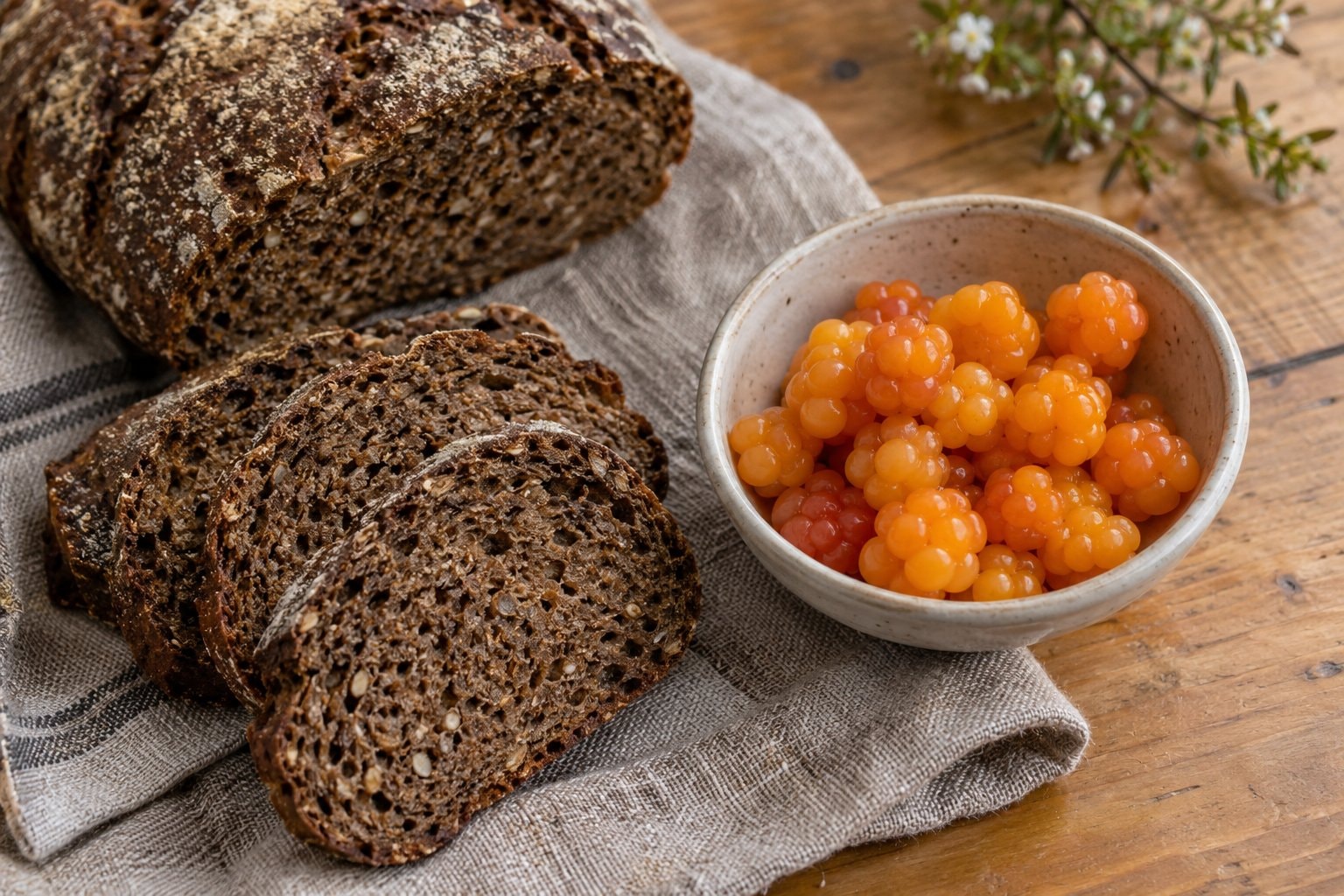
A cuisine can become newly interesting when familiar ingredients are examined more closely. Rye, oats, roots, berries and fish are useful starting points for thinking about Nordic food. Their appeal lies in texture, flavor and their connection to a place. New Nordic cuisine brought that attention into a stated program: food could express its surroundings while traditional cooking methods supplied material for invention. The result invites questions that reach well beyond a restaurant dining room.
A manifesto that begins with place
Wikipedia's account of New Nordic Cuisine describes a manifesto developed in Copenhagen in 2004, with local and seasonal ingredients at the center of its approach. The movement encouraged the use of foods suited to a region's climate, water and soil. Familiar dishes and methods were part of the project, too. The interesting tension is between continuity and invention: an ingredient can remain recognizable while a cook changes its setting, texture or role.
The manifesto's emphasis on simplicity need not mean that a dish is technically simple. It can mean that the chosen ingredient remains the point of the dish. A home cook can use that distinction without trying to reproduce elaborate restaurant work. An apple can be cooked until soft or left crisp. Rye can provide a dense slice of bread or a toasted crumb. The useful question is what a method lets a particular ingredient do, rather than how many techniques fit on a plate.
The movement's account describes renewed attention to rapeseed, oats, cheese and older apple and pear varieties, as well as to familiar practices such as salting and marinating. Those are features of the cuisine's development, rather than instructions to preserve foods at home. There is room to study a method's cultural role without attempting it. In particular, the movement's interest in foraged ingredients is not an invitation to identify or gather wild plants from a description of a meal.
The Copenhagen kitchen in the discussion
Wikipedia's Noma account dates the Copenhagen restaurant's opening to 2003 and records its final regular dinner service, in Kyoto, in December 2024. The restaurant became closely associated with foraging, invention and interpretations of New Nordic cuisine. The account describes a subsequent role as a food laboratory, with periodic temporary residencies. It also records repeated leading placements in international restaurant rankings.
These institutional details matter because they show how a movement can acquire a public point of reference. They do not make a ranking a description of Nordic food as a whole. A restaurant can investigate ingredients in concentrated, elaborate ways, while the food of a region also includes daily meals and familiar baking. Reading both scales together gives a fuller question: how does an idea developed in a professional kitchen relate to what people recognize as ordinary food?
That question keeps the discussion grounded. The name of a restaurant can identify its place in a movement without supplying a list of dishes to imitate or a reason to seek a table. For a curious cook, the more durable subject is the attention paid to ingredients. The Scandinavian table of open sandwiches, brown cheese and cardamom offers everyday counterparts to the movement's broader ideas. Bread and buns make place tangible at a different scale.
Rye, berries and the everyday table
Rye bread is made with differing proportions of rye flour. It can be light or dark, and its structure is usually denser than that of wheat bread. That description is a reminder to look closely rather than rely on a color: a dark slice and a pale slice may both belong to the family. In a meal, density, crust and flavor influence how a topping or sauce behaves. A sturdy slice gives a cook a different canvas from an airy loaf.
Danish open sandwiches are part of the ordinary lunch table as well as a field for careful arrangement. Their basic structure allows ingredients to remain visible. A piece of bread, a topping and a garnish can be considered separately, then together. This makes the open sandwich a useful way to think about composition: what sits underneath, what supplies moisture, what makes a crisp edge, and what can be left out so that the other parts remain clear?
Cloudberries offer another expression of place. The plant produces amber fruit and belongs to cool temperate, alpine and Arctic environments and boreal forest. Its fruit appears in desserts and confectionery. That botanical description should not become a claim that every Nordic dessert contains it, nor a guide to finding it in the wild. The broader kitchen idea is to let a fruit remain legible: its acidity, color and texture can guide the sweetness and the form of the dish around it.
Wikipedia's Danish-cuisine account also describes a long history of influences from elsewhere, including imported cinnamon, cardamom, nutmeg and black pepper. An emphasis on local ingredients therefore sits within a cuisine that has never been explained by locality alone. It is possible to value nearby produce while acknowledging the spices and techniques that arrived through exchange. The boundaries of a food culture are useful questions rather than sealed containers.
What the word terroir adds
Wikipedia describes terroir as the environmental setting, growing habitat and farming practices that influence a crop. The term is associated with wine, but the reference also discusses foods such as cheese. Its significance in wine is debated. Used carefully, the idea draws attention to the relationship between ingredients and their surroundings without claiming that a taste has a single, easily isolated cause.
The cheese essay follows milk, method and time; the farming essay follows production systems and the decisions around them. Those are useful companions to a Nordic discussion of place. The source of an ingredient and the skill applied to it can both be investigated. Neither needs to disappear behind a broad label.
For the home table, attention can be modest and practical. Choose an ingredient that has a clear role in the meal. Taste it before deciding how much seasoning to add. Notice whether a method makes it softer, darker, sharper or more aromatic, and whether that change suits the other food alongside it. Such questions keep regional cooking open to curiosity. They allow a cuisine to be studied through ordinary food, with room for both familiar habits and new uses.