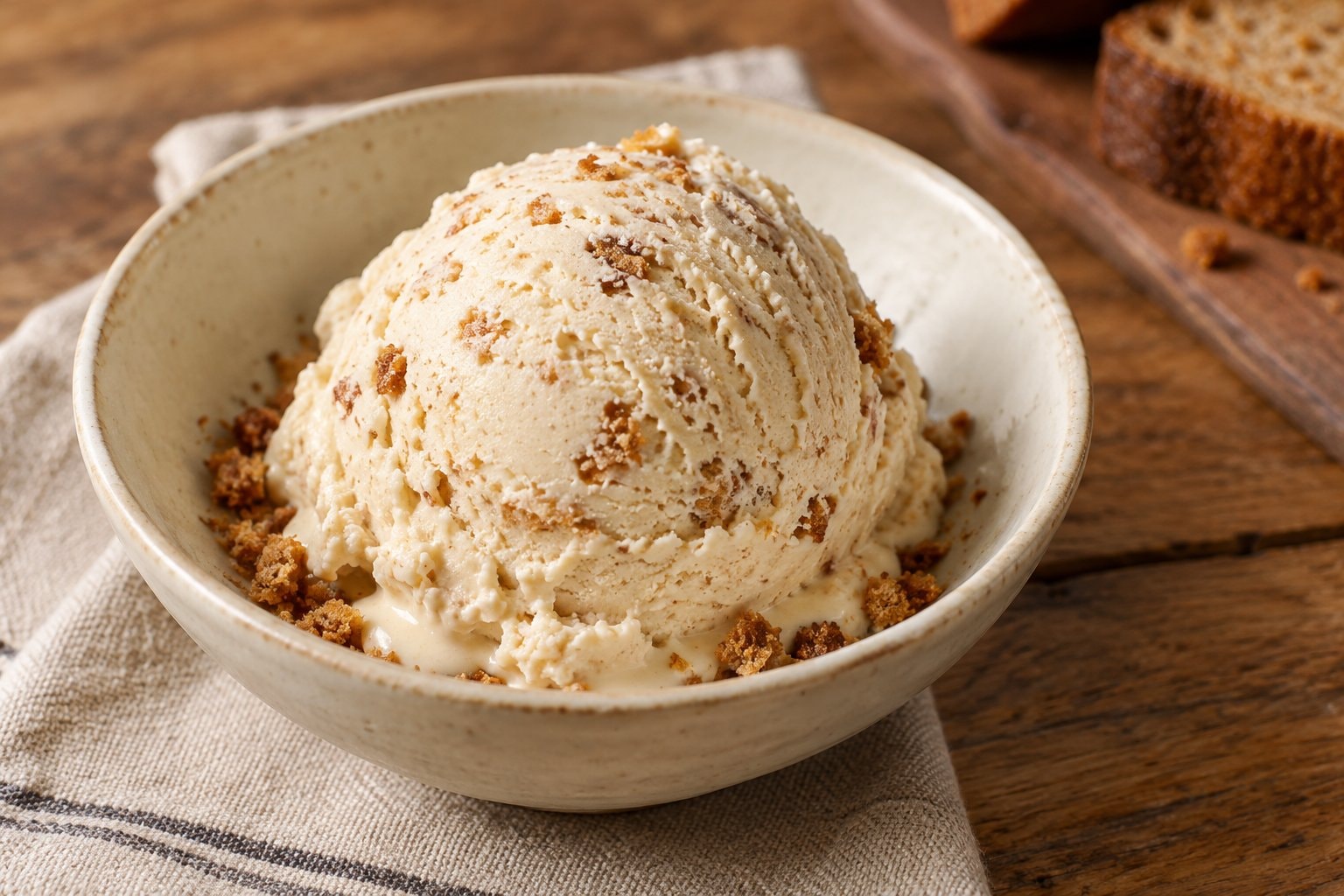
Ice cream asks a cook to think about both the saucepan and the freezer. The base begins as a liquid, but the finished dessert needs a smooth, scoopable texture. Flavor is only part of the task. Cooling, stirring and the moment when an addition enters the mixture all matter. Brown-bread ice cream makes those decisions especially visible: a creamy base holds small toasted crumbs that contribute a different kind of bite.
Cold desserts and the work of freezing
Wikipedia's history of ice cream treats the origins of frozen desserts as uncertain, with different accounts rather than a single secure invention story. It also describes how adding salt to ice helped draw heat from a cream mixture and make freezing possible. Brown breadcrumbs appear among the flavors recorded in its historical account. The combination therefore belongs to a longer dessert story, even though its kitchen method can remain quite straightforward.
The same account describes ice cream as a milk- or cream-based mixture that is cooled and stirred to incorporate air and avoid perceptible ice crystals. Churning is not merely a way to move the dessert around. It helps turn a liquid mixture into a smoother frozen texture. A cold base gives a home machine a useful starting point; a warm one asks the freezer to remove heat before much freezing can happen.
The container matters at the end, too. A shallow covered tub lets the churned mixture be spread evenly rather than piled into a tall mound. Keep the transfer quick, with the container ready before the machine finishes. The freshly churned ice cream will be soft. Time in the freezer firms it for scooping, so the final texture cannot be judged only by what leaves the machine.
A custard that pours
Wikipedia's article on custard describes milk or cream cooked with eggs to thicken it, with textures ranging from a pouring sauce to a firm pastry cream. The ice-cream base here belongs to the pouring side of that range. It needs gentle heat and steady stirring, especially along the bottom and corners of the pan. The aim is an evenly thickened liquid, not a set pudding.
Prepare the cooling bowl before heating the custard. The saucepan retains heat after it leaves the burner, so the finished base is strained into a separate bowl and cooled promptly. A spoon is useful for seeing the texture, while a thermometer makes the heat easier to judge. The custard notebook follows the related question of how an egg mixture sets into a dessert that can be unmolded.
Egg handling belongs to the method from the beginning. Use clean tools and work surfaces, keep the eggs refrigerated and cook the base until it thickens before cooling it. The egg notebook considers freshness and safe handling alongside the batters eggs help lift. A frozen dessert still requires careful preparation before it becomes cold.
Crumbs, mint and fruit
The bread is prepared separately so its toastiness can be judged before it joins the cream. Break or pulse it into small uneven crumbs, then bake it with butter and sugar. Let the crumbs cool completely and break up any large clusters. Add them near the end of churning rather than soaking them throughout the custard's cooling time. Keep a little aside to scatter over each serving if a sharper contrast is wanted.
Other variations can follow the same logic. For mint, steep clean mint leaves in the warm milk, strain them out and continue with the base. For a chocolate-chip version, add finely chopped chocolate near the end of churning. For a fruit swirl, cook crushed fruit into a thick sauce, cool it completely and fold it loosely through the churned dessert. These are choices about how a flavor enters the mixture, not a reason to change every part of the recipe at once.
A frozen fruit preparation can also remain separate from the dairy base, making a distinct dessert rather than a swirl. Start by choosing whether the desired result is creamy, icy or layered. The San Francisco notebook takes the creamy route into an oatmeal-cookie sandwich, where the cookie becomes another part of the texture.
Brown-bread ice cream
A cooked vanilla custard holds toasted bread crumbs in this home version. Follow the FDA's egg-safety advice for handling and preparing eggs; use pasteurized egg yolks for this recipe and cook the custard base until it thickens. Chill the base thoroughly before churning.
Yield: about 1.2 liters (5 cups). Active time: 40 minutes. Total time: about 9 hours, including chilling and freezing.
Ingredients
- 150 g (3 cups) fresh crumbs from plain whole-wheat bread
- 30 g (2 tablespoons) unsalted butter, melted
- 60 g (¼ packed cup plus 1 teaspoon) light brown sugar
- 300 ml (1¼ cups) whole milk
- 300 ml (1¼ cups) heavy cream
- 125 g (½ cup plus 2 tablespoons) granulated sugar
- 90 g (about 5 large) pasteurized egg yolks
- 5 ml (1 teaspoon) vanilla extract
- 1 g (⅛ teaspoon) fine salt
Method
- Prepare the ice-cream machine as its instructions require. Heat the oven to 180°C (350°F). Mix the bread crumbs, butter and brown sugar on a lined baking sheet. Bake for 15–20 minutes, stirring often, until crisp and toasted. Cool completely.
- Set a heatproof bowl over a larger bowl of ice water. Warm the milk, cream and half the granulated sugar in a saucepan until steaming. Whisk the yolks with the remaining sugar in another bowl.
- Pour the warm milk mixture gradually into the yolks, whisking constantly. Return to the pan. Stir over low heat until the custard thickens and coats the back of a spoon, reaching about 78°C (172°F). Do not let it boil. Strain immediately into the cooling bowl and stir in the vanilla and salt.
- Stir occasionally over the ice bath until cool. Cover and refrigerate at 4°C (40°F) or below for at least 4 hours, until thoroughly cold.
- Churn according to the machine's directions. Add most of the cooled crumbs during the final minute, reserving a little for serving. Transfer to a covered freezer container and freeze for about 4 hours, until firm enough to scoop.
Kitchen notes
Use plain bread without seeds or dried fruit so the crumbs toast evenly. Break the cooled crumbs apart before adding them. Keep the dessert frozen, and soften only the amount needed for serving briefly at room temperature. Return the container promptly to the freezer rather than repeatedly melting the whole batch.