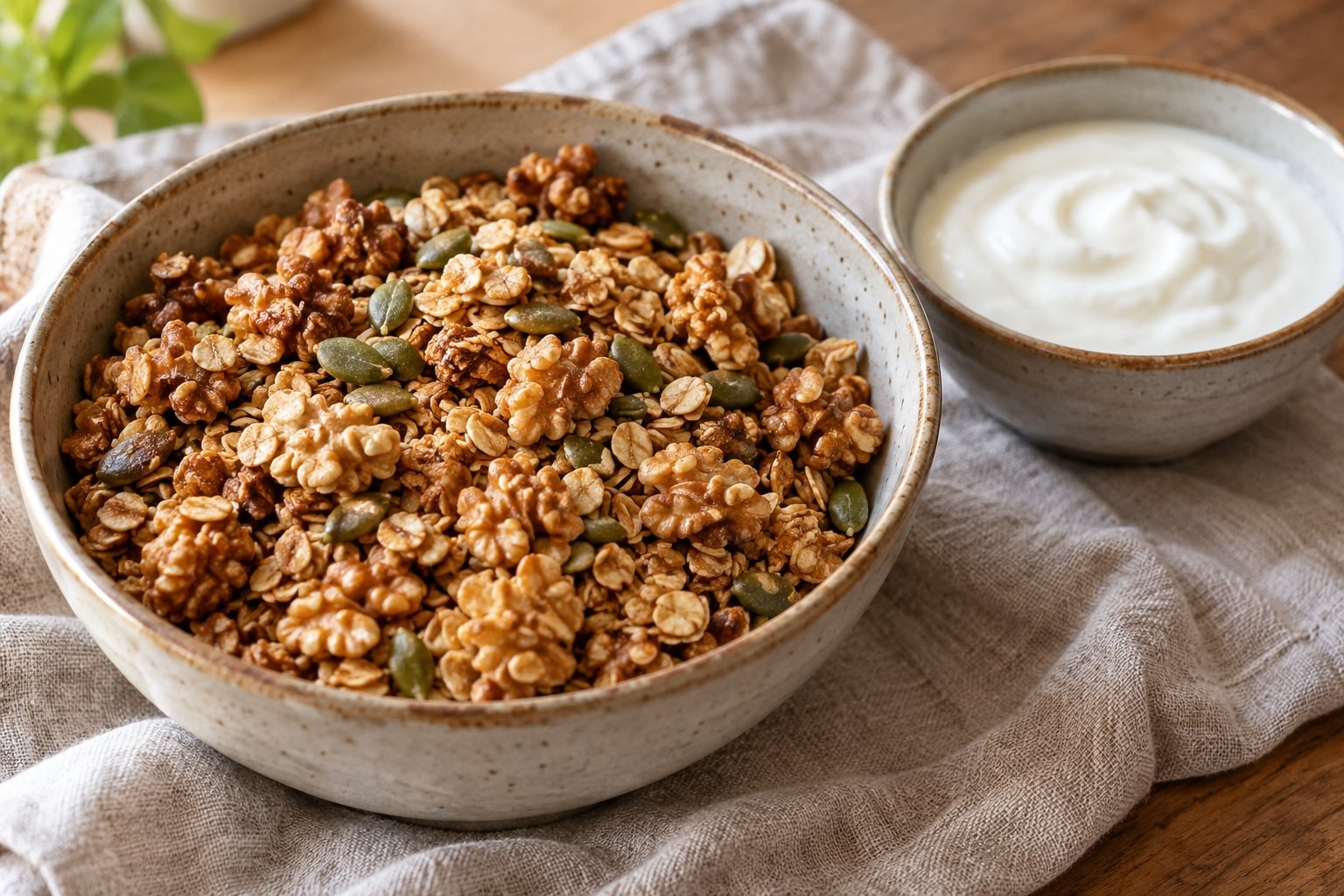
Breakfast can be a useful study in texture: a crisp oat cluster, a soft spoonful of yogurt, a pancake with a browned edge. The ingredients may overlap while the results feel quite different. According to Wikipedia's article on granola, the cereal combines rolled oats with nuts, seeds and a sweetener, then usually bakes with oil until toasted and crisp. The oven is part of its character. A bowl of uncooked oats with the same additions belongs to a different sort of breakfast.
Oats, baked or soaked
Wikipedia's account of muesli describes a Swiss dish prepared without cooking, traditionally using rolled oats that are soaked and combined with such ingredients as apple, nuts and milk. Granola and muesli therefore offer different ways to handle the same grain. In a kitchen, the choice can begin with the texture wanted at the table: granola stays deliberately dry and crunchy until liquid reaches it; soaked muesli is spoonable from the start.
The distinction is useful when assembling a bowl. Keep granola separate from yogurt until serving if crispness matters. For softer oats, prepare a muesli mixture ahead and let the liquid do the work. Fresh fruit need not be treated as decoration. Slice it thinly for a little fruit in each spoonful, or leave it in larger pieces if a clearer contrast is wanted. These are small cooking decisions that make a familiar breakfast feel considered.
Strained yogurt has had much of its whey removed, which gives it a thicker consistency while keeping its sour taste. Its firm texture lets a loose cereal sit on top rather than disappear at once into the bowl. Plain yogurt makes a different arrangement, with the cereal floating more freely. Neither needs a long list of additions: a spoon, a bowl and a deliberate balance of soft and crisp are enough.
The pancake pan
Pancakes are batter breads cooked on a hot surface, and their shape and structure vary between places. North American versions commonly use a raising agent to produce a thicker pancake, while thin English pancakes are often unleavened. That contrast is another reminder that a broad name can hold quite different dishes. The egg and batter notebook follows the related question of how a batter lifts and sets.
Ricotta offers a home-kitchen variation. The fresh cheese has creamy white curds and a slightly sweet taste; fold a little into a pancake batter for a gently irregular texture rather than whisking every curd away. Keep the pan at a moderate heat so the surface colors while the center cooks through. A wide spatula and patience are more helpful than repeated pressing. For a breakfast that comes from a loaf tin instead, the bread notebook turns to quick breads and their different crumb.
Pumpkin flavor, pumpkin spice
Pumpkins are winter squashes, and the name covers more variation in shape and color than the familiar round orange fruit suggests. Their seeds and pulp are edible. Butternut squash is another winter squash, with tan skin and orange flesh; it can be roasted, mashed or used in breads and pies. In breakfast cooking, a spoonful of smooth cooked squash can go into a pancake batter, while roasted cubes belong beside a savory plate. The ingredient and the spice blend are separate choices.
Pumpkin-pie spice contains no pumpkin. Its usual blend brings together cinnamon, nutmeg, ginger and cloves, sometimes with allspice. The granola below uses those warm aromas without adding squash purée, so the oats can dry and toast readily. Maple syrup supplies the sweetener. It is made by concentrating maple-tree sap through heating, and its use in pancakes and baking makes it a natural bridge between the breakfast pan and the baking tray.
A bowl can change with the fruit at hand while keeping the same cereal underneath. The apple notebook is a place to consider varieties and cooked fruit. Here, sliced apple works as a fresh accompaniment; dried fruit is mixed into the cereal only after baking. That keeps the recipe's oven step focused on oats, nuts and seeds.
Pumpkin-spice granola
This is a loose, crisp granola with walnut pieces and a clear spice flavor. Wikipedia's description of pumpkin-pie spice identifies the familiar cinnamon, nutmeg, ginger and clove combination. The recipe uses the spices directly, leaving room to adjust their balance in the next batch.
Yield: about 800 g (8 cups). Active time: 20 minutes. Total time: 1 hour 15 minutes, including cooling.
Ingredients
- 300 g (3 cups) old-fashioned rolled oats
- 100 g (1 cup) walnuts, roughly chopped
- 60 g (½ cup) shelled pumpkin seeds
- 120 ml (½ cup) maple syrup
- 60 ml (¼ cup) neutral cooking oil
- 5 g (2 teaspoons) ground cinnamon
- 2 g (1 teaspoon) ground ginger
- 1 g (½ teaspoon) ground nutmeg
- 0.5 g (¼ teaspoon) ground cloves
- 3 g (½ teaspoon) fine salt
- 100 g (⅔ cup) raisins or chopped dried apricots
Method
- Heat the oven to 160°C (325°F). Line a large rimmed baking sheet with parchment. Choose a sheet that lets the cereal lie in a fairly shallow layer.
- Mix the oats, walnuts and pumpkin seeds in a large bowl. Whisk the syrup, oil, spices and salt in a smaller bowl, then pour them over the oat mixture. Stir thoroughly, reaching the dry ingredients at the bottom.
- Spread the mixture evenly on the sheet. Bake for 30–35 minutes, stirring gently after 15 minutes and again near the end. Watch the corners, moving darker cereal toward the center. Stop when the oats are golden and smell toasted.
- Leave the cereal on its tray until completely cool. It will become firmer as it cools. Break apart any large clusters, fold in the dried fruit and transfer to a dry airtight container.
Kitchen notes
Use rolled oats rather than an instant porridge mixture. If the sheet looks crowded, divide the batch between trays and exchange their positions during baking. For larger clusters, press the cereal lightly after the final stir and leave it undisturbed while it cools. Serve with yogurt or milk, adding fresh fruit at the table.