A regional table is easier to understand dish by dish than through a single image of a country. Italian cooking contains national traditions and many regional ones; Tuscany adds its own bread, soups, pasta and sweets to that larger picture. Siena's panforte and the almond biscuits known as cantucci offer a particularly clear contrast. The former is chewy and dense, the latter dry and crisp. Both ask a cook to pay attention to what fruit, nuts and flour can do when handled differently.
Bread, beans and a straightforward table
Tuscan cooking is associated with a plain approach that makes use of bread, legumes, vegetables, cheese and fruit. Its unsalted white bread has a place beside other dishes and within them. Ribollita is an especially useful example: the soup uses leftover bread with beans and vegetables, and its name means reboiled. The bread is an ingredient with another life in the pot, rather than only a slice set beside it.
Regional pasta offers a different texture. Pici resembles thick spaghetti and is often rolled by hand. The gesture matters as much as the name: a cook takes a piece of dough and turns it into a long strand. Beside that hand-shaped pasta, a bread soup shows another way of building a dish from simple staples. The bread notebook follows dough, fermentation and the crumb beyond the Tuscan table.
Italy's regional traditions also reach toward the coast. The bottarga essay considers cured roe and its use in a pasta dish. Reading such dishes together keeps the regional question open: an ingredient's treatment, not merely its name, helps locate the food in a kitchen and a place.
The sweet end: panforte and almonds
Wikipedia's article on panforte describes a chewy fruit-and-nut dessert associated especially with Siena and Italian Christmas traditions. Its name refers to a strong or spicy bread. Honey, fruit, nuts and spices belong to its ingredient story, creating a different impression from a light sponge cake. A small slice invites close attention to the pieces within it and the dense mixture that holds them together.
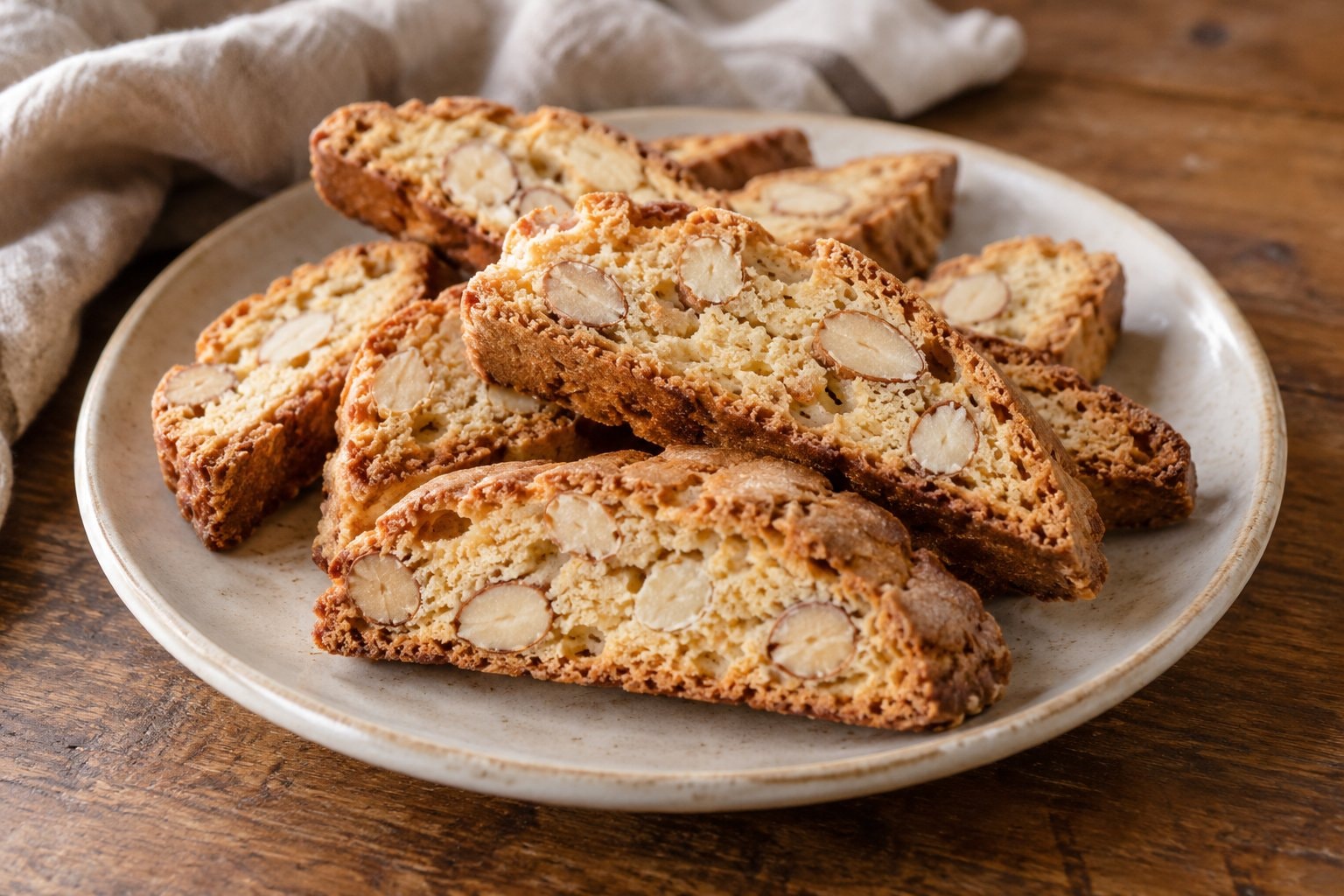
Cantucci makes a different use of nuts. The almonds remain distinct within a firm dough, then show in the sliced biscuit. The almond itself is the seed inside the fruit's hard shell. Blanched almonds have had their skin removed after treatment with hot water, while almonds with skins keep a brown edge around the pale center. In the recipe here, either can work; the choice changes how the slice looks more than how the method proceeds.
Tuscan sweets also include castagnaccio, a chestnut-flour cake, and ricciarelli, biscuits built on an almond base. That range is useful to notice. A regional dessert table can contain different flours, different ways of using nuts and different textures, while sharing an interest in familiar ingredients. A home cook need not compress those distinctions into a claim that every sweet tastes alike.
Place as a working idea
The idea of terroir asks how a crop's environment and cultivation help shape its character. The term is closely associated with wine, and its significance is debated within the wine industry. It also appears in discussions of other foods. On the Tuscan table, the useful question is how place can be discussed precisely: soil and growing conditions are different subjects from a dish's method, even though both belong to the larger story of food.
Wikipedia's entry for Slow Food identifies an organization promoting local food, with headquarters in Bra, Italy. That Italian base gives another setting for thinking about local foods and the questions they raise. The travel notebook takes related questions into other regions, asking what a dish's ingredients and preparation can reveal about the place where it is eaten.
UNESCO's listing of the Mediterranean diet describes skills, knowledge and traditions that concern growing, harvesting, processing, cooking and sharing food. Its emphasis on eating together puts the meal alongside the ingredients. That wider cultural frame can sit comfortably beside the close work of baking: a tray of biscuits is a kitchen object, and the act of setting it on the table is another part of the subject.
Almond cantucci
Wikipedia's description of biscotti identifies the Tuscan almond biscuits also known as cantucci as twice-baked, dry and crunchy. This recipe bakes a firm dough in logs, slices it and returns the biscuits to the oven. Orange zest supplies a quiet aroma without hiding the almonds.
Yield: about 28 biscuits. Active time: 30 minutes. Total time: 1 hour 30 minutes, including cooling.
Ingredients
- 250 g (2 cups plus 1 tablespoon) all-purpose flour
- 150 g (¾ cup) granulated sugar
- 5 g (1 teaspoon) baking powder
- 2 g (⅓ teaspoon) fine salt
- 150 g (1 cup) whole almonds
- 100 g (2 large) eggs, without shells
- 30 g (2 tablespoons) unsalted butter, melted and cooled
- 5 ml (1 teaspoon) vanilla extract
- 4 g (2 teaspoons) finely grated orange zest
Method
- Heat the oven to 180°C (350°F). Line a large baking sheet with parchment. Mix the flour, sugar, baking powder and salt, then stir in the almonds.
- Whisk the eggs, butter, vanilla and zest together. Add to the dry mixture and stir to make a firm dough. Use clean hands to bring the last dry crumbs together without prolonged kneading.
- Divide into 2 portions. With lightly damp hands, shape each into a log about 25 cm (10 inches) long and 5 cm (2 inches) wide. Leave space between them. Bake for 25–30 minutes, until lightly golden and firm.
- Cool the logs for 15 minutes. Reduce the oven to 150°C (300°F). With a serrated knife, cut diagonal slices about 1.5 cm (½ inch) thick, using a gentle sawing motion.
- Lay the slices flat on the sheet. Bake for 15 minutes, turn them over and bake for 10–15 minutes more, until dry and lightly colored. Cool completely on a rack before storing.
Kitchen notes
Slice while the logs are warm enough to cut without shattering, but cool enough to hold their shape. Let the knife do the work through the whole almonds rather than pressing straight down. The final bake is a drying step: a lower heat gives the slices time to crisp without darkening too quickly.