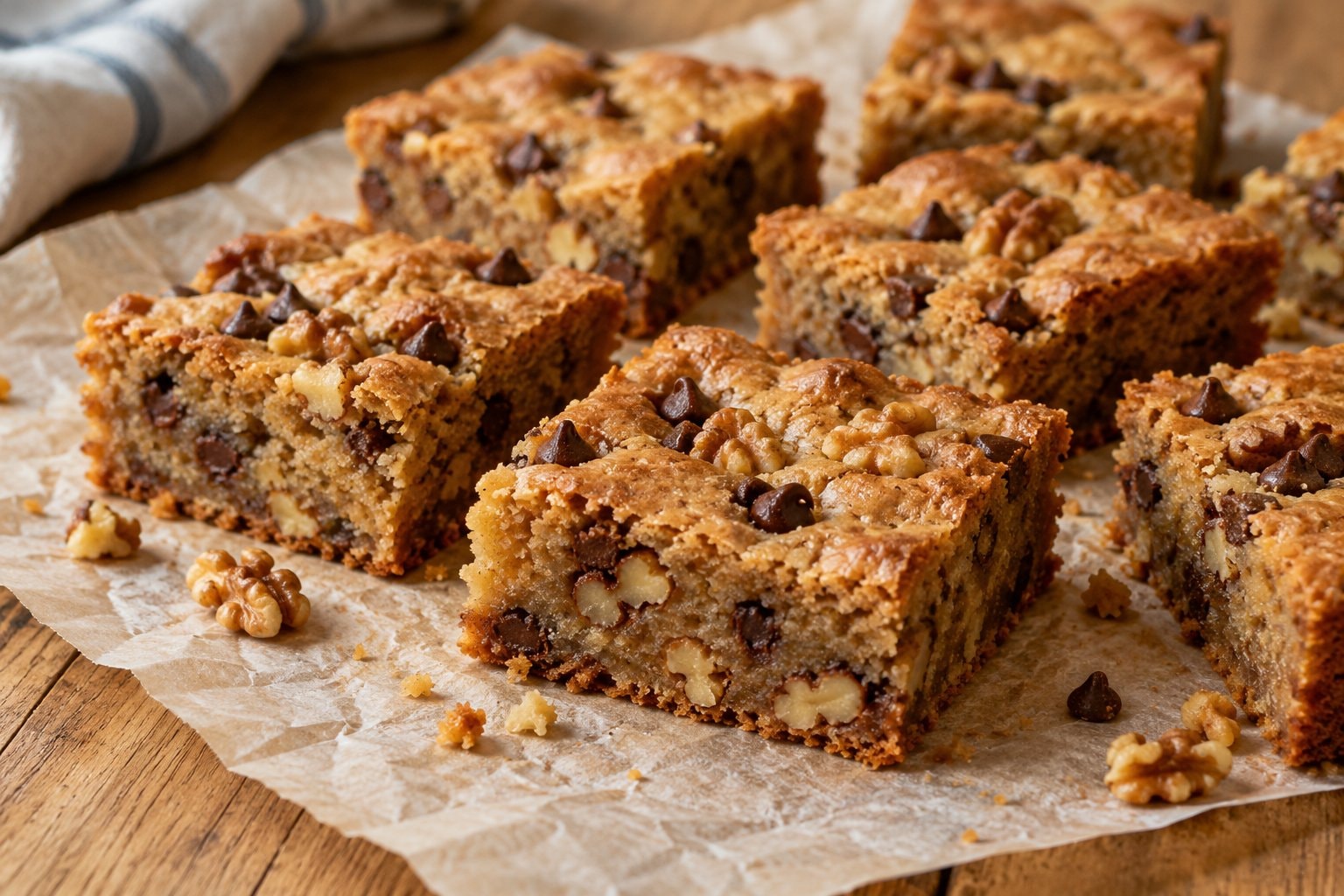
Browning is an instruction that asks a cook to look, smell and decide. A pale dough becomes a dark-edged cookie; butter develops flecks that smell nutty; clear sugar turns amber. These changes belong to the same kitchen vocabulary, but they are not all the same process. Paying attention to which ingredient is changing makes the instruction more useful. A pan of butter and a pan of sugar call for different handling, even when the finished colors look close.
A darker color, a different reaction
Wikipedia's account of the Maillard reaction explains it as a reaction between amino acids and reducing sugars that gives browned foods their characteristic flavors. Bread crusts and cookies are among its examples. The name describes chemistry behind familiar kitchen observations: a surface can become more aromatic and deeply colored as it cooks. It does not mean that every brown surface is caramel.
Wikipedia's article on caramelization describes the browning of sugar and distinguishes it from the amino-acid reaction. In the pan, plain sugar can become caramel without the other ingredients needed for Maillard browning. A baker can use that distinction without turning a recipe into a chemistry lesson. Watch sugar for the color needed for a sauce; watch butter for the color of the milk solids moving beneath the foam.
Butter separates as it melts, with milk solids settling toward the bottom of the pan. Gentle continued heating browns those solids, producing the nutty smell associated with beurre noisette. Stirring or swirling lets a cook see what is happening underneath. A light-colored pan helps, and a heatproof bowl waiting nearby makes it easy to stop the cooking as soon as the butter reaches the wanted color.
The principle reaches beyond sweets. The stock and gelatin notebook considers browning as part of building a savory liquid. In a dessert batter, however, the small browned flecks are worth keeping: pour them into the bowl with the butter instead of leaving them behind in the saucepan.
Chocolate, nuts and contrast
Hazelnuts are used in baking and confectionery, including praline and combinations with chocolate. Their familiar presence beside chocolate offers a useful idea for home baking: give a smooth or chewy mixture a little broken texture. Walnuts serve that role in the bars below. Chop nuts coarsely enough to remain recognizable, while leaving pieces small enough that the finished bar can be sliced cleanly.
The American campfire s'more combines toasted marshmallow and chocolate between graham crackers. The warm marshmallow softens the chocolate and brings the sandwich together. That simple arrangement makes texture part of the dish: brittle cracker, soft marshmallow and melting chocolate. A kitchen bar can pursue a different balance, with browned butter in the crumb and pieces of chocolate still distinct after cooling.
The cookie notebook follows other ways of combining spice, butter and nuts. For a softer dessert, the custard essay considers a smooth filling and its caramel counterpart. A small amount of sauce can be served beside the bars here, letting the sauce and the bar keep their own textures.
Brown-butter blondie bars
Wikipedia's description of beurre noisette explains how gentle heating turns the milk solids in butter brown. In these bars, that butter supplies a toasted flavor beneath brown sugar, walnuts and chopped chocolate. Let the butter cool before mixing so the chocolate can remain in pieces.
Yield: 16 bars from a 20 cm (8 inch) square pan. Active time: 25 minutes. Total time: 1 hour 45 minutes, including cooling.
Ingredients
- 170 g (¾ cup) unsalted butter
- 200 g (1 packed cup) light brown sugar
- 100 g (2 large) eggs, without shells
- 5 ml (1 teaspoon) vanilla extract
- 180 g (1½ cups) all-purpose flour
- 2 g (½ teaspoon) baking powder
- 3 g (½ teaspoon) fine salt
- 80 g (¾ cup) chopped walnuts
- 100 g (⅔ cup) chopped dark chocolate
Method
- Heat the oven to 180°C (350°F). Line the pan with parchment, leaving enough overhang to lift out the baked slab.
- Melt the butter in a saucepan over medium-low heat. Stir as it foams, scraping gently along the bottom. When the solids are brown and the butter smells toasted, pour everything into a heatproof mixing bowl. Cool for 15 minutes, until warm rather than hot.
- Stir the brown sugar into the butter, then beat in the eggs and vanilla with a wooden spoon until the mixture is smooth. Mix the flour, baking powder and salt separately. Fold them into the butter mixture just until no dry flour remains, then fold in the nuts and chocolate.
- Spread the thick batter evenly in the pan, reaching the corners. Bake for 25–30 minutes, until the edges are set and a skewer in the center comes out with moist crumbs but no wet batter. Avoid a skewer driven through a piece of melting chocolate.
- Cool completely in the pan. Lift out using the parchment and cut into 16 squares with a sharp knife, wiping the blade between cuts.
Kitchen notes
The butter continues cooking in a hot pan, so transfer it promptly. If the solids turn black or smell scorched, start again. A metal baking pan gives a clearer edge than a deep ceramic dish; whichever pan is used, rely on the set center and crumb test as well as the clock.
A short salted caramel sauce
Wikipedia's article on caramel describes caramel sauce as caramelized sugar mixed with cream. This small batch finishes with butter and salt for a spoonable sauce. Have every ingredient measured before the sugar begins to color.
Yield: about 240 ml (1 cup). Active time: 15 minutes. Total time: 30 minutes, including cooling.
Ingredients
- 150 g (¾ cup) granulated sugar
- 45 ml (3 tablespoons) water
- 120 ml (½ cup) heavy cream, gently warmed
- 30 g (2 tablespoons) unsalted butter, cubed
- 2 g (⅓ teaspoon) fine salt
Method
- Stir the sugar and water together in a deep saucepan. Heat gently until dissolved, then bring to a steady bubble. Stop stirring; swirl the pan occasionally until the syrup turns a clear amber.
- Take the pan off the heat. Add the warm cream gradually, standing back from the steam and vigorous bubbling. Stir with a long-handled spoon. If firm caramel remains, return to low heat and stir until smooth.
- Stir in the butter and salt. Cool until warm before serving. Transfer any remaining sauce to a clean covered container and refrigerate; warm gently to loosen it.
Kitchen note
Hot sugar sticks and can burn. Keep the pan steady, use a long-handled utensil and never taste the sauce until it has cooled.