Food travel becomes more interesting when a dish is allowed to be specific. A pastry can reveal how a dough is layered; a fish soup can show what happens to an ingredient after it leaves the water; a bowl of melted cheese can make the bread beside it part of the meal. This notebook follows such details along coasts, through old cities and into mountain country. The thread is cooking: ingredients, methods and the ways a table is arranged.
The Dalmatian coast: a regional Croatian table
Wikipedia's account of Croatian cuisine emphasizes the differences between mainland and coastal cooking. Along the coast, it describes Mediterranean influences and the use of olive oil, herbs and citrus rind. Dalmatia belongs to that regional picture, with fish soups and stews among its dishes. The same broad label can cover a great deal of variation, so a regional name is a beginning for inquiry rather than a complete description.
A Dalmatian fish soup may include pieces of fish, carrots and rice; squid can be grilled, fried, stuffed or stewed. Those preparations give a visitor useful distinctions to listen for. Ask how the fish is cooked and what accompanies it. The method can be as revealing as the ingredient, especially when a menu gives only a short dish name.
Burek and börek: layers that cross borders
Wikipedia's article on börek describes a family of filled pastries found across West Asia and Southeast Europe. Thin flaky dough can enclose cheese, spinach, meat or potatoes. A pastry may be baked in a large pan and portioned afterward or formed individually; some versions are fried. The name travels, and the shape and filling travel with their own variations.
Look at the cut surface as well as the exterior. A crisp shell and a soft filling make a different arrangement from a dense, closely packed slice. This attention to dough also connects with the Siena and Tuscany notebook, where nuts and flour become sweets with very different textures.
Istanbul: vegetables, rice and a spread of small dishes
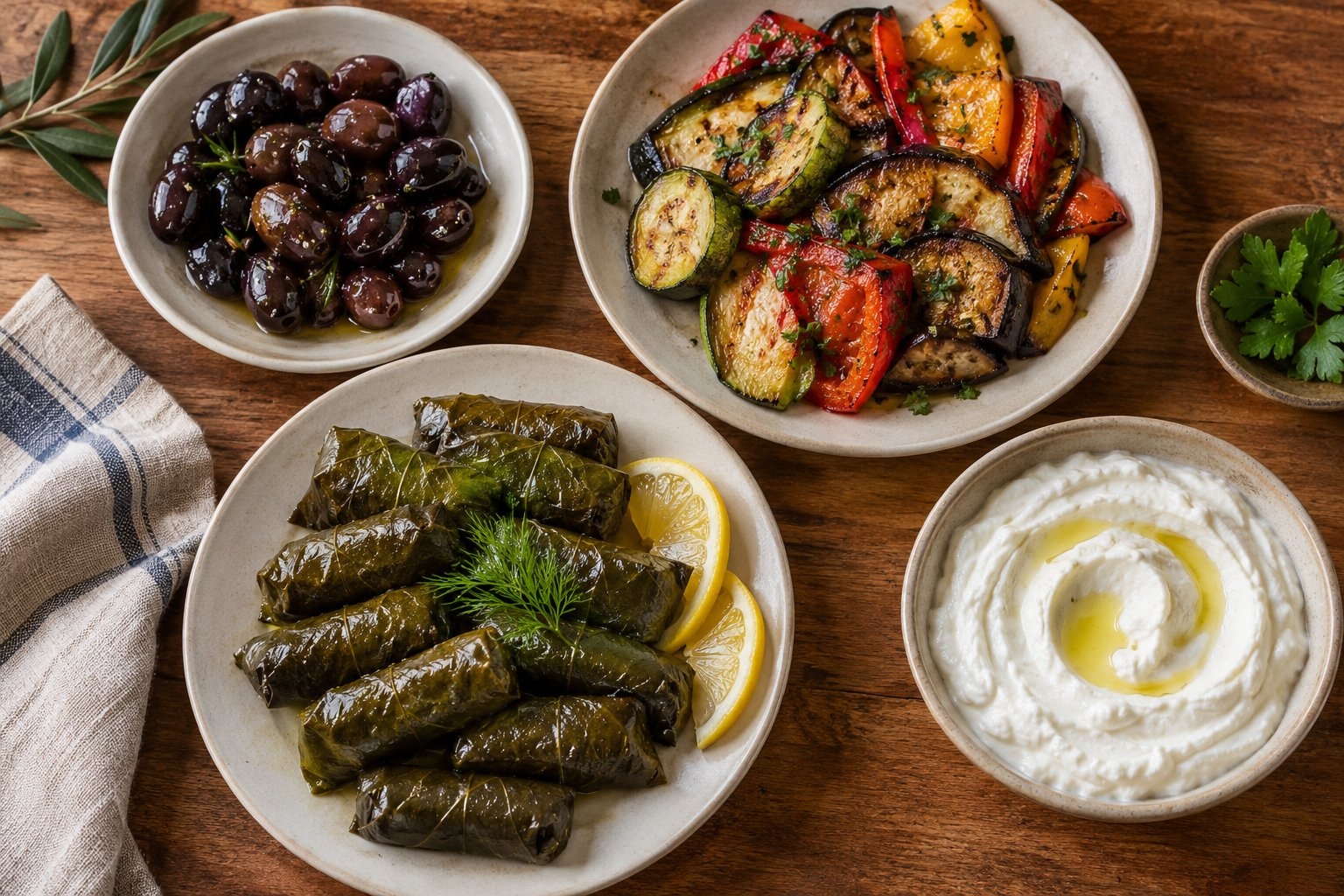
Wikipedia's account of Turkish cuisine places Istanbul's cooking in the inheritance of Ottoman court cuisine, including vegetable stews, stuffed dolmas, rice and köfte. The larger Turkish table is regional, with differences between coastal areas and inland cooking. A useful reading begins with a preparation: a stuffed leaf, a stew or a shaped portion of dough tells more than a broad claim about everything eaten in a country.
Wikipedia's description of meze calls it a selection of small dishes that can begin a meal or form the meal itself. Olives, cheese, stuffed leaves, salads and dips are among the possibilities. At a table of small plates, notice the balance of soft and firm, warm and cool, plain and strongly seasoned. The Spain essay offers another setting for thinking about food served in small portions.
Greek islands: fish, herbs and the grain beside them
Wikipedia's article on Greek cuisine describes fish dishes as common in coastal regions and on the islands. Olive oil, vegetables, wheat bread, cheeses, herbs and lemon also belong to its account. The ingredients provide a broad frame without making every island table identical. A visitor can stay close to a dish by asking which herb is used, what accompanies the fish and whether the vegetables are raw, roasted or stewed.
Greek desserts bring another set of materials into view: nuts, honey, fruit, sesame and filo. A flaky pastry is an opportunity to look at how layers have been handled. A simple plate of fruit asks a different kind of attention, centered on ripeness and flavor.
Marrakech: spice, bread and the covered pot
Wikipedia's account of Moroccan cuisine describes a table shaped by cultural exchange, with flavorings such as preserved lemon, olive oil and dried fruit. Its meal description begins with hot and cold salads, followed by a tagine or another main dish. Wheat has a place in bread and couscous. For a food walk in Marrakech, those ingredients and methods provide practical questions to carry from a market display to a finished meal.
Wikipedia's article on tagine explains that the stew takes its name from the earthenware pot. Its tall cover returns condensation to the base, helping the food braise with little water. Meat, poultry or fish may cook with vegetables or fruit. The vessel is therefore part of the method, not simply a way to present the dish. Notice the liquid, the tenderness of the ingredients and how bread is used alongside them.
Wales: a broth, a griddle and a fruit loaf
Wikipedia's account of Welsh food names cawl, rarebit, laverbread, Welsh cakes and bara brith among its distinctive dishes. Cawl brings meat and vegetables into a broth. Welsh rarebit puts seasoned melted cheese over bread, while laverbread uses cooked seaweed. Those dishes reach different parts of a food landscape, from farmed ingredients to the coast.
Welsh cakes are small spiced cakes traditionally cooked on a bakestone and also made on a griddle. Bara brith is a fruit loaf that may include raisins, currants and candied peel. The Scotland notebook continues the question of regional baking with shortbread and the wider meal in which it appears.
Switzerland: dairy in the mountains, variation across regions
Wikipedia's description of Swiss cuisine links its diversity to language, culture and geography. Mountain areas have a strong dairy-farming tradition, while other regions grow cereals, fruit and vegetables. Fondue and raclette use melted cheese with bread or potatoes; rösti gives potatoes another form. The same ingredients can play quite different roles, depending on how they are prepared and served.
Swiss breads, tarts and breakfast foods widen that view. A loaf or a fruit tart can be as informative as a dish associated with mountain cooking. Look for the flour, the filling and the way the bread is shaped, allowing small local differences to remain visible.
Louisiana: a Creole kitchen in America
Wikipedia's account of Louisiana Creole cuisine describes influences including West African, French, Spanish and Native American cooking. Dishes such as gumbo, jambalaya and shrimp creole show how a regional cuisine can be read through preparation as well as ingredients. A roux, made by cooking fat and flour together, is important to many Creole dishes. Its color can vary according to the dish.
Rice has a central role in jambalaya, while shrimp creole combines shrimp with tomatoes and aromatic vegetables. Creole desserts include pralines and preparations using fruits and pecans. These are useful particulars to hold beside the broad cultural account: a cuisine is made in the pot as well as described by its influences.
Questions to carry into a market
Begin a meal plan with something specific. Ask which produce is local, what is ready to eat and how an unfamiliar ingredient is usually prepared. Listen for a cooking method rather than expecting a long origin story. A name written down beside a brief description can be more useful later than a hurried photograph of an entire counter. The food-market notebook follows that connection between growing, selling and cooking.
Leave room to change the plan. A delicate vegetable may need to be cooked promptly; bread or a more durable ingredient can wait. Keep a meal manageable enough that its parts can be noticed. Food travel rewards close attention to what is actually on the plate, and that habit remains useful when the next kitchen is at home.