An apple offers more than a familiar outline. A variety has a name, a fruit has a texture, and a preparation asks something specific of it. Thinking about those differences makes an orchard and a baking dish part of the same conversation. The question is not simply whether an apple tastes good, but what a cook hopes to do with it.
Wikipedia's apple account describes the orchard apple as widely cultivated and places its origins in Central Asia. Its discussion ranges from growing to cultural meanings. For the home kitchen, that breadth is a reminder that a commonplace ingredient can carry a long and complicated background without needing an elaborate presentation.
A variety is a useful detail
Wikipedia's account of Cox's Orange Pippin describes an English cultivar with orange-red coloring and aromatic, fine-grained flesh. It records a flavor that becomes softer with age. The name is useful here as a concrete example of a variety, rather than a promise that a particular apple is always available or suited to every task.
When preparing a dessert, look beyond the label. Cut a piece and consider whether the flesh feels firm, juicy or yielding. The recipe below asks for apples cut to a similar size so the pieces cook together. Taste before adding the full amount of sugar, then make a modest adjustment if needed. Such decisions belong to cooking the fruit in front of the reader, not to a ranking of cultivars.
A basket containing more than a single variety can be approached with the same care. Keep track of which apple is being used and note what happens in a familiar method. That is more useful than changing the fruit, pan and baking approach all at once. The fruit-pie essay makes similar distinctions among dishes that share fruit but differ in structure.
Normandy and cider country
The Normandy reference identifies the region as an important producer of cider, alongside dairy and other activities. Wikipedia's cider article describes an alcoholic drink made from fermented apple juice. It distinguishes cider apples within the wider use of apples for that purpose. These are matters of regional food culture; no drinking recommendation or pairing follows from them.
This offers a way to look at an orchard without assuming that every apple is destined for a fruit bowl. A crop may be used in different preparations. Pressing fruit and baking it are different routes, and the food vocabulary of a region can reflect those routes. A clear account can name the drink matter-of-factly while keeping the kitchen recipe focused on a dessert.
The shape of an apple dessert
Tarte Tatin places caramelized fruit beneath pastry during baking. Brown Betty distributes sweetened crumbs through layers of fruit. A crisp has another arrangement, while strudel encloses its filling in thin dough. Similar apples therefore lead to different questions: whether pastry stays distinct, whether crumbs absorb juices, and how the filling behaves when a slice is lifted.
The Vienna essay explores strudel and its stretched dough. The preserves page follows fruit into another kind of set. Each preparation rewards attention to its own structure, rather than treating the apple as an ingredient that can be moved between methods without adjustment.
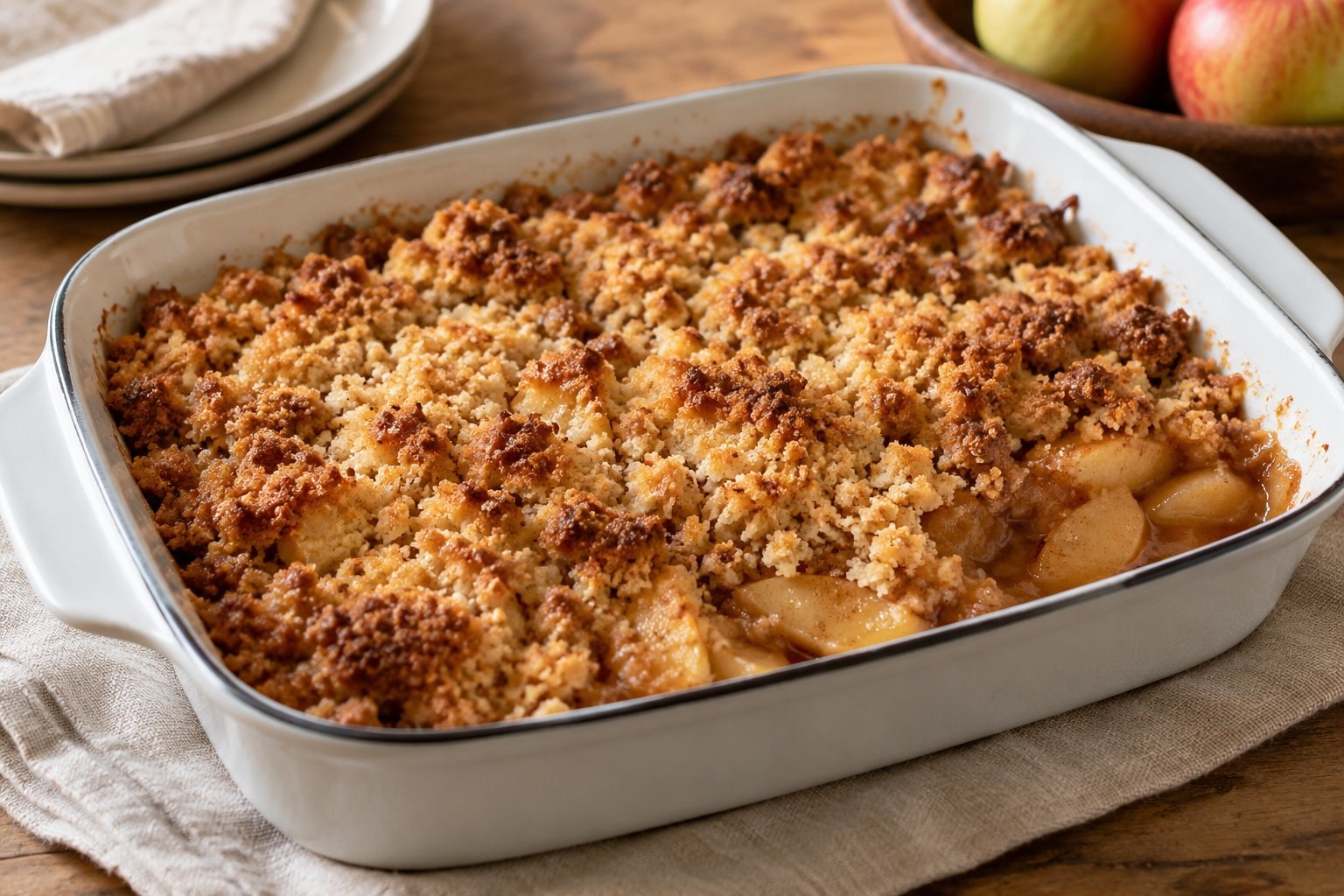
Apple brown Betty
Wikipedia describes brown Betty as an American fruit dessert with sweetened crumbs layered through the fruit. This version uses a plain loaf for the crumbs and a little lemon with the apples. Its purpose is a soft fruit layer with a browned, crumbly surface.
Ingredients
- 900 g (2 pounds) apples, weighed before peeling
- 150 g (about 3 cups) coarse fresh bread crumbs
- 75 g (5 tablespoons) unsalted butter, melted, plus a little for the dish
- 80 g (⅓ cup plus 1 tablespoon) light brown sugar
- 3 g (1 teaspoon) ground cinnamon
- 15 ml (1 tablespoon) lemon juice
- 45 ml (3 tablespoons) water
- 1 g (a generous pinch) fine salt
Method
- Butter a shallow 1.5-liter (6-cup) baking dish. Heat the oven to 180°C (350°F). Peel and core the apples, then cut them into slices of similar thickness.
- Toss the crumbs with the melted butter and half the sugar. Mix the apples separately with the remaining sugar, cinnamon, lemon juice and salt.
- Scatter some buttered crumbs over the base of the dish. Add a layer of apples, more crumbs and the remaining apples. Finish with the last of the crumbs. Pour the water around the edges rather than over the surface.
- Cover loosely with foil and bake for 25 minutes. Remove the foil and continue for 20–25 minutes, until a knife enters an apple slice easily and the crumbs are golden.
- Set the dish on a heatproof surface and wait 10 minutes before spooning out portions. Keep any leftovers covered in the refrigerator.