Scandinavia is a useful place to begin with bread. A slice can support a carefully arranged lunch, a flatbread can wrap a filling, and a soft bun can bring spice into a sweet dough. These foods invite a closer look at texture as well as ingredients. Dense, flexible and airy are different kitchen aims, and each asks something different of the cook.
An open sandwich starts underneath
Wikipedia's account of smørrebrød describes an open sandwich built on buttered dark rye, with toppings that may include meat, fish, cheese or spreads. Think of the bread as part of the dish rather than a support to ignore. Its flavor stays in the mouth alongside the topping. A careful arrangement also makes the ingredients visible before the sandwich is eaten.
Rye bread comes in light and dark forms, depending on flour and other ingredients; it is generally denser than wheat bread. That distinction makes a useful comparison with a soft bun. For an open sandwich at home, spread the butter to the edges, keep a moist topping under control and leave enough clear structure to cut a tidy mouthful. Those choices are practical, rather than a claim that every regional version follows the same pattern.
Danish food culture places open sandwiches among familiar lunch foods. Its baking also includes wienerbrød, the pastry known in English as Danish pastry. Bread and pastry therefore offer different routes into a meal: a substantial slice, a delicate layered dough, or a sweet yeast preparation. The bread essay follows those differences through leavening and texture.
Brown cheese and a soft flatbread
Brunost belongs to a different conversation about dairy. Wikipedia's description of brown whey cheese explains that whey, milk or cream may be used, with milk sugars caramelizing during boiling. The name geitost appears among its forms. Its brown color is therefore part of the making, rather than a rind added through aging.
Set that process beside the curds and draining discussed on the cheese page. Similar starting materials do not guarantee similar foods. Concentrating a liquid and separating curds from whey point in different directions. This is an especially useful comparison for a cook who knows cheese mainly as something firm enough to cut.
Wikipedia describes lefse as a soft Norwegian flatbread made with riced potatoes, with versions also using flour, butter and milk or cream. It is cooked on a flat griddle. A flatbread asks for a supple result, quite unlike the crisp exterior sought in some loaves. The article records sweet and savory ways of filling or topping it, so a single description of how it is eaten would be too narrow.
Fruit, keeping and an imported spice
The cloudberry brings another texture and color to this table. Its amber fruit grows in cool temperate, alpine and Arctic settings, according to the reference account. The fruit appears in desserts and confectionery. No wild-picking instructions are needed to appreciate that contrast with dark rye or pale dairy foods.
The Norwegian cuisine account emphasizes ingredients available locally, game and fish, and foods kept for long winters. The Danish account also records the use of imported spices, including cardamom. Place therefore need not mean a sealed pantry. A regional cooking tradition can combine local materials with an ingredient that arrived from elsewhere. The New Nordic cuisine essay considers another approach to place, seasons and ingredients.
Cardamom buns
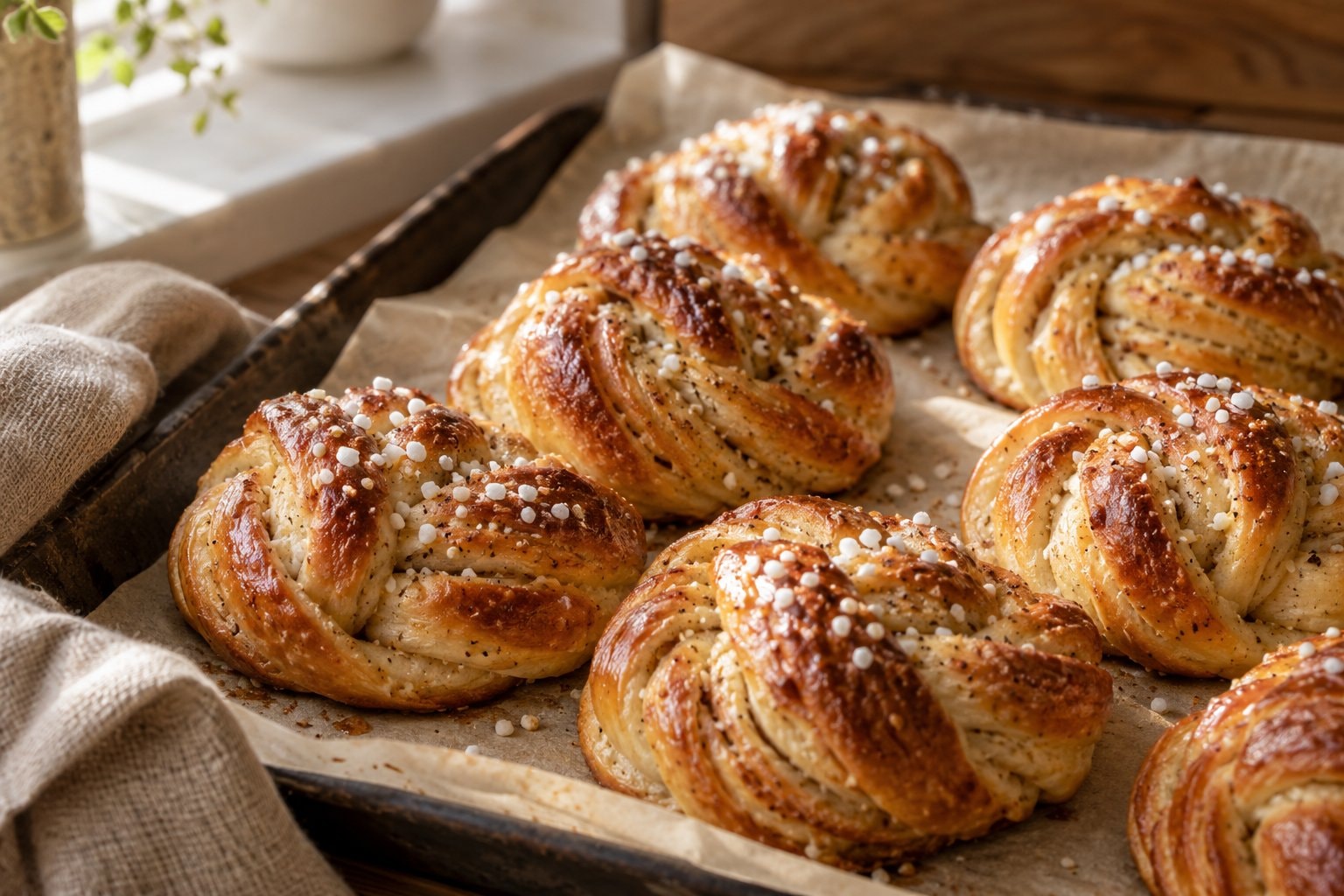
For shaping, clear a patch of work surface and keep the filling within reach. A sharp knife or a dough scraper makes portioning easier. Let the cut spirals sit upright on the tray so their layers remain visible; there is no need to pull them into an elaborate knot.
These are soft, lightly sweet yeast buns with a butter-and-cardamom filling. Wikipedia's cardamom article records its use in Nordic baking, including Swedish sweet buns. This home-kitchen version uses a simple rolled dough and a restrained filling so the spice remains clear.
Ingredients
- 420 g (3½ cups) all-purpose flour, plus a little for shaping
- 7 g (2¼ teaspoons) instant yeast
- 60 g (¼ cup plus 1 tablespoon) granulated sugar
- 4 g (¾ teaspoon) fine salt
- 240 ml (1 cup) whole milk, lukewarm
- 60 g (4 tablespoons) unsalted butter, very soft
- For the filling: 60 g (4 tablespoons) soft unsalted butter, 50 g (¼ cup) sugar and 6 g (2 teaspoons) ground cardamom
- 15 ml (1 tablespoon) milk for brushing
Method
- Stir the flour, yeast, sugar and salt together in a roomy bowl. Work in the milk and dough butter until a rough dough gathers. Knead on a lightly dusted surface until it feels smooth and elastic, about 8 minutes.
- Cover the dough in its bowl. Leave it somewhere comfortably warm until visibly swollen and almost doubled, allowing about 60–90 minutes. Meanwhile, beat the filling ingredients into a spreadable paste.
- Roll the dough into a rectangle about 30 × 40 cm (12 × 16 inches). Cover it with the paste, leaving a narrow bare border. Roll from a long edge into a log and slice into 12 portions.
- Arrange the spirals on a parchment-lined baking sheet with room between them. Cover loosely and let them become puffy, about 40 minutes. Heat the oven to 190°C (375°F).
- Brush the buns with the reserved milk. Bake for 20–24 minutes, turning the sheet if needed, until golden on the exposed dough. Lift them to a rack and let the filling settle before pulling apart.