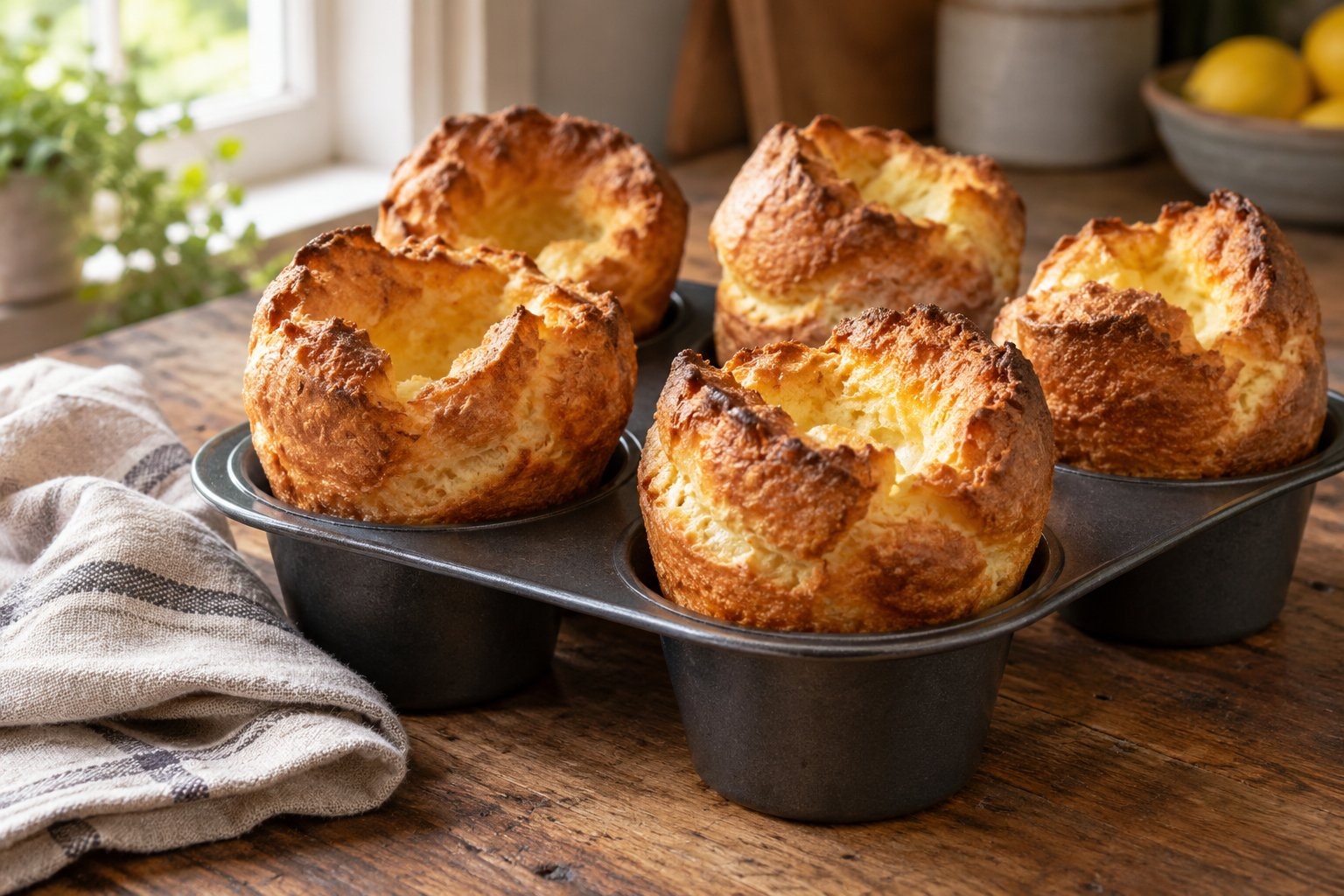
An egg has several jobs in a kitchen. Its yolk can help bring a mixture together or thicken a custard. Its white can become a foam. A whole egg belongs in cakes, batters and savory dishes. These uses share an ingredient but ask for different kinds of handling. Understanding the job before beginning makes the method easier to follow, especially when the desired result is a tall, hollow popover rather than a flat pancake or a smooth custard.
Freshness is one question; safe handling is another
The eggs-as-food reference describes an air cell at the larger end of a shell egg. It grows as moisture is lost and the egg ages. That is a description of age and quality. It does not replace the handling and cooking steps required for eggs in a home kitchen. Appearance alone cannot settle every question raised by an ingredient.
FDA egg-safety advice explains that even fresh eggs with clean, uncracked shells may contain Salmonella. It advises keeping eggs refrigerated, checking shells for cracks, washing hands and utensils after raw-egg contact, and cooking eggs and egg dishes thoroughly. For a recipe served with raw or undercooked eggs, the FDA advises eggs treated to destroy Salmonella or pasteurized egg products. The popovers below are fully baked.
Keep the carton in the refrigerator until preparation begins, and take out only what the recipe needs. Crack eggs into a separate small bowl before adding them to the main mixture so a piece of shell is easy to remove. Clean the work area after handling raw eggs, and keep the finished food appropriately cold or serve it promptly. A production description and a fresh-looking shell both leave these kitchen tasks in place.
What the production label describes
Wikipedia's free-range-egg account describes eggs from birds that may have outdoor access and notes that the term's meaning depends on the country and its rules. Cage-free or barn descriptions can apply to birds kept indoors. Those systems differ from battery or furnished cages, but the label alone does not define a cooking method or establish a verdict about every aspect of production.
A useful question is therefore what a particular label means under the rules that apply to it. Another is what the recipe needs from the egg: a whole egg, yolks, whites or a stated size. These questions operate at different scales. The label describes a production system; the ingredient list describes the amount and part of the egg used in the dish. Neither removes the need for safe handling.
Foams and batters take different routes
Egg whites can be beaten into a light foam. Meringue combines whipped whites and sugar, with the proteins changing as they are beaten and forming the structure that holds the foam. The meringue reference describes soft, firm and stiff peaks as ways to judge that structure. A cook can look at what the foam does when the whisk is lifted, rather than treating all whipped whites as interchangeable.
That is a different task from mixing a pourable egg batter. A popover is an American baked pastry related to Yorkshire pudding, made in deep individual tins. A Dutch baby uses a related egg, milk and flour batter in a hot pan and is baked in the oven. The Dutch-baby reference describes it without chemical leavening and notes that it falls after leaving the oven. The difference in the pan changes the finished shape.
Wikipedia's bread reference explains steam leavening: heating turns water into vapor, which expands within the mixture and contributes to its rise. That general process helps explain the light interior of the fresh egg-batter recipe below, while the eggs contribute structure. The oven and the pan need to be ready before the batter is poured. A changing shape in the oven is part of the cooking process, not evidence that a chemical raising agent has been added.
The custard essay follows eggs into a mixture that should set gently. The ice-cream essay begins with a cooked custard base. Read beside a popover, those methods make the importance of the ingredient's job clear: the same egg can support a smooth texture or an expanded batter.
Popovers
Wikipedia's popover reference describes the light American egg-batter pastry and its relationship to Yorkshire pudding. This version uses a hot pan and a simple batter of eggs, milk and flour. Prepare the serving plate before they finish baking so they can reach the table promptly.
Ingredients
- 150 g (3 large) eggs
- 240 ml (1 cup) whole milk
- 125 g (1 cup) all-purpose flour
- 3 g (½ teaspoon) fine salt
- 20 g (1½ tablespoons) unsalted butter, melted and cooled
- 15 ml (1 tablespoon) neutral oil, for the pan
Method
- Heat the oven to 230 °C (450 °F) with a rack below the center. Whisk the eggs and milk until smoothly combined. Whisk in the flour and salt just until no dry patches remain, then the melted butter. Rest for 10 minutes.
- Put a metal popover pan with 6 deep cups in the oven for 5 minutes. Remove carefully and brush the cups with the oil. Keep clear of the hot metal and place the pan on a heatproof surface while filling.
- Whisk the batter briefly, then divide among the cups, filling them about halfway to two-thirds full. Return to the oven immediately.
- Bake for 20 minutes without opening the door. Lower the oven to 190 °C (375 °F) and bake for another 15–20 minutes, until the popovers are deeply golden, expanded and firm. The interiors should be cooked rather than wet.
- Lift from the pan carefully. Make a small slit in the side of each to let steam escape, then serve while hot. The crust and interior are at their best soon after baking.
The stock and gelatin essay looks at another route to structure in food. Placing the methods beside each other gives a cook a useful vocabulary: foam, set, gel and steam describe different work in the kitchen.