Spain is easier to read through its regional tables than through a list of dishes labeled national. Barcelona offers a Catalan starting point, San Sebastián a Basque one, and Andalusia another set of ingredients and preparations. The purpose of this comparison is not to decide which is most representative. It is to look carefully enough that the differences remain visible.
Wikipedia's Spanish cuisine account emphasizes regional diversity. It also describes olive oil as widely used, including in vegetable sauces, and notes the place of garlic and herbs. Shared ingredients can connect meals without making them identical. How they are handled, what accompanies them and how a dish is served all deserve attention.
Barcelona and the Catalan table
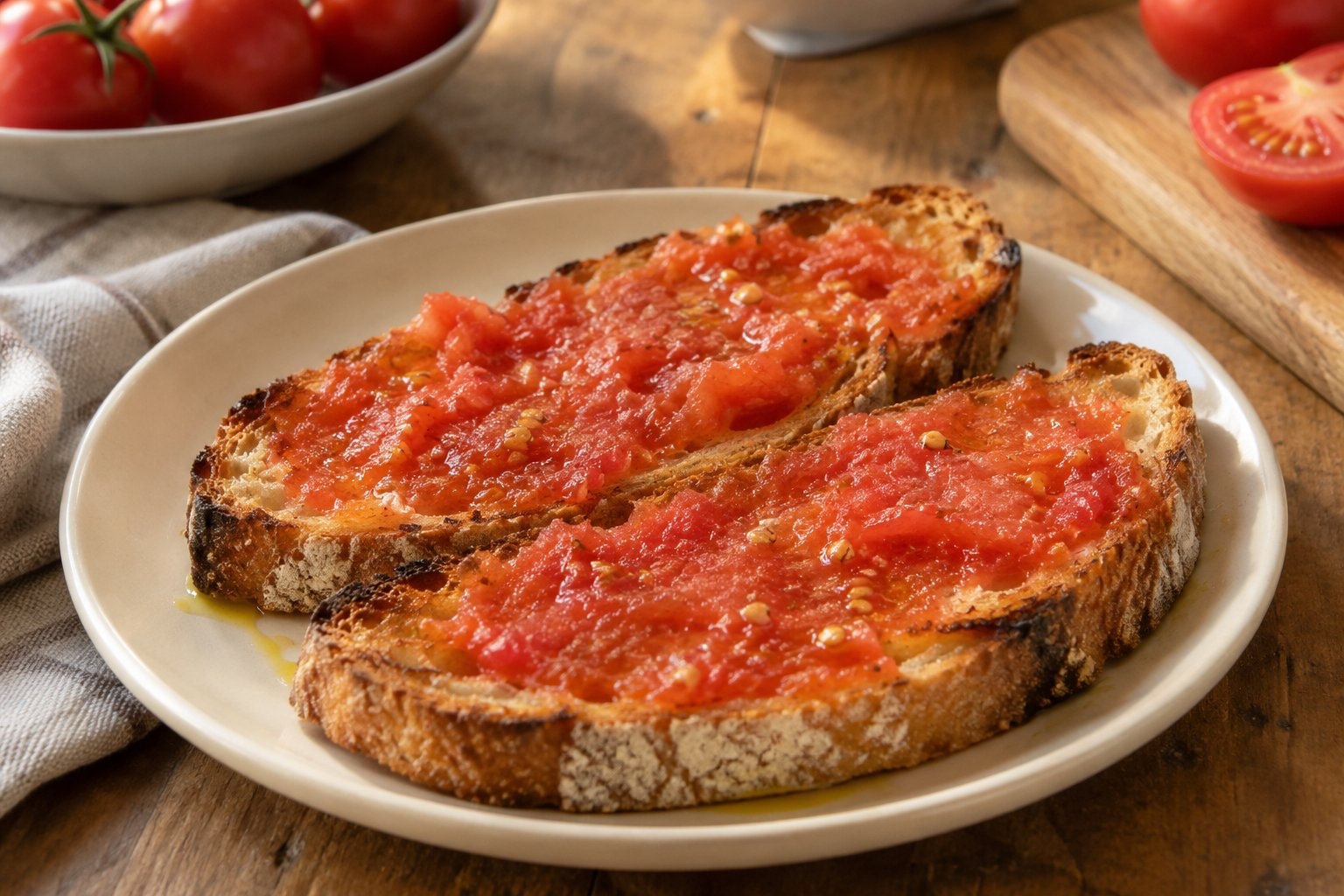
The Catalan cuisine reference places the cooking traditions of Catalonia within the western Mediterranean. It also records pa amb tomàquet: bread with tomato and olive oil. This is a useful dish to consider slowly, because its short description leaves very little room to hide an ingredient. The bread, the ripeness of the tomato and the amount of oil are each readily apparent in a bite.
A home preparation can start by deciding what texture is wanted. A very soft slice and a crisp toasted slice offer different experiences. Tomato can be rubbed onto a cut surface or grated before being spread. In the recipe below, grating makes the amount easier to distribute. The result should still feel like bread dressed with tomato, rather than a damp slice carrying a thick sauce.
That distinction offers a way to look at other simple foods. Ask which ingredient holds the dish together and which provides contrast. It is a kitchen question with no need for a restaurant ranking. The market essay takes a similar approach to a basket of produce, starting with what an ingredient makes possible.
San Sebastián and food in small pieces
Wikipedia's description of Basque cuisine includes grilled meat and fish, stews, cod, bean dishes and pintxos. This range is a useful reminder to look beyond the small snack when reading the region. A stew and a carefully assembled mouthful can belong to the same cuisine while asking for very different kitchen work.
The pincho account describes pintxos as small snacks, often fixed to bread with a toothpick, and places them in a social setting. The skewer is a useful visual clue, though not a complete definition of regional cooking. At home, the idea can prompt attention to proportion: can the bread, topping and garnish be eaten comfortably together? Does a wet ingredient overwhelm the base? Is the shape manageable?
Reading a small dish this way makes presentation practical. A garnish needs a reason to be there, perhaps a crisp texture or a sharp flavor. A large pile can make the intended mouthful awkward. An arrangement that can be lifted and eaten neatly is often a better starting point than decoration alone. These are choices for a home cook, not rules imposed on every pintxo.
Andalusia brings another set of questions
Wikipedia's Andalusian cuisine account names gazpacho and fried fish among its characteristic dishes. It identifies olive oil in frying and describes historic Christian, Muslim and Jewish influences. This is a different route into the regional table: temperature, frying technique and a history of exchange all come into view.
Rather than asking for a single image of Spanish cooking, compare the actions involved. Dressing bread requires an attentive hand with liquid. Assembling a small snack requires proportion. Frying asks for control of heat and the surface of the food. These observations can make a regional essay useful in a kitchen without turning it into a claim that all cooks in a place behave alike.
The travel notebook follows food through other coastal and inland settings. The cookie essay looks at another kind of regional variation, where a familiar ingredient can take very different shapes. In either case, names are a starting point for attention rather than a substitute for it.
Pa amb tomàquet
Wikipedia's Catalan cuisine account identifies bread, tomato and olive oil in pa amb tomàquet. This preparation keeps those ingredients clear, with optional garlic for a sharper edge. Choose a ripe tomato and sturdy bread, then dress the slices shortly before they reach the table.
Ingredients
- 200 g (about 8 thick slices) rustic bread
- 300 g (about 2 medium) ripe tomatoes
- 30 ml (2 tablespoons) olive oil
- 1 small garlic clove, peeled, optional
- 2 g (⅓ teaspoon) fine salt, or less to taste
Method
- Warm a dry heavy skillet over medium heat. Toast the bread on each cut surface until crisp in patches while the center remains slightly yielding.
- Halve the tomatoes across the middle. Grate each half on the coarse side of a grater over a bowl, holding the skin until the flesh has passed through. Discard the remaining skin.
- If using garlic, lightly rub a cut clove over the warm bread. Stop before its flavor overwhelms the tomato.
- Distribute the tomato pulp over the slices. Drizzle with the oil, season with the salt and bring to the table while the toast still offers some resistance.