Cheese is a way of giving milk a different structure. A soft spoonful, a firm slice and a blue-veined piece may all begin with milk, but their making does not stop at the same point. Separating the stages helps explain those differences. The animal supplying the milk matters, but so do acidification, curd formation, draining and time.
Curds are a beginning, not a finished description
The cheese reference describes milk being acidified and enzymes such as rennet helping its casein to coagulate. Casein is a milk protein. The solid curds are then separated from liquid whey. This basic distinction is worth holding onto when reading about different cheeses: curd and whey are different materials, even though both come from the same milk.
The cheesemaking account places these operations among the practices that preserve milk in another form. A finished texture depends on further choices about handling and aging. A fresh cheese does not ask the same questions as a matured one, and a rind or an internal mold introduces another feature to understand. It is more useful to identify the method than to assume that the word cheese explains everything.
At home, the recipe below makes those stages visible through heating, acid and draining. It is a fresh preparation using pasteurized whole milk. It does not ask the reader to make a mature cheese, cultivate a rind or carry out raw-milk cheesemaking. A close look at the curds is enough for this particular lesson.
The raw-milk discussion needs careful terms
Wikipedia's raw-milk account defines it as milk that has not undergone pasteurization. It records supporters' arguments about flavor as well as food-safety concerns and differing regulations. Keeping those strands distinct avoids turning a preference about taste into a statement about food handling.
This essay offers no raw-milk instructions or recommendation. The relevant point is how the subject is discussed: a production choice, a sensory argument and a regulatory question are related but separate. A source can describe each without requiring the reader to take a side in favor of a product. The fresh recipe uses pasteurized milk and ordinary kitchen equipment.
Cheddar and Stilton: names tied to specifications
Cheddar's reference account places its origin in Somerset and describes a relatively hard cheese. It records protected names for particular regional forms, rather than giving all Cheddar a single protected designation. Stilton's account describes blue and white varieties and conditions linking the name to specified English counties.
The European Commission's explanation of geographical indications connects protected names with place and production specifications. This is useful language for reading cheese accurately. A regional protection says something particular about a name and its rules; it is not a general judgment of every cheese with a similar appearance.
Wikipedia's account of Neal's Yard Dairy records a London cheese business's role in selling artisanal British and Irish cheeses, including farmhouse Cheddar. It is named here only as an example within that history of cheese. No shop information or recommendation is needed to make the connection between a product, its makers and the way it reaches a wider table.
Firmness, whey and a fresh spoonful
Halloumi offers another texture. Its reference account identifies Cyprus as its origin and describes a cheese that can be grilled or fried because of its high melting point. Ricotta starts a different discussion: traditionally a whey cheese, it is also often made from milk in modern preparations. That distinction matters when comparing a home recipe with a general definition.
The Scandinavia essay follows whey into brunost, where concentration and browning produce another result. The breakfast page places ricotta among other dairy preparations, while the farming discussion returns to protected names and production. These links offer different questions to carry back to the same ingredient.
Fresh whole-milk ricotta
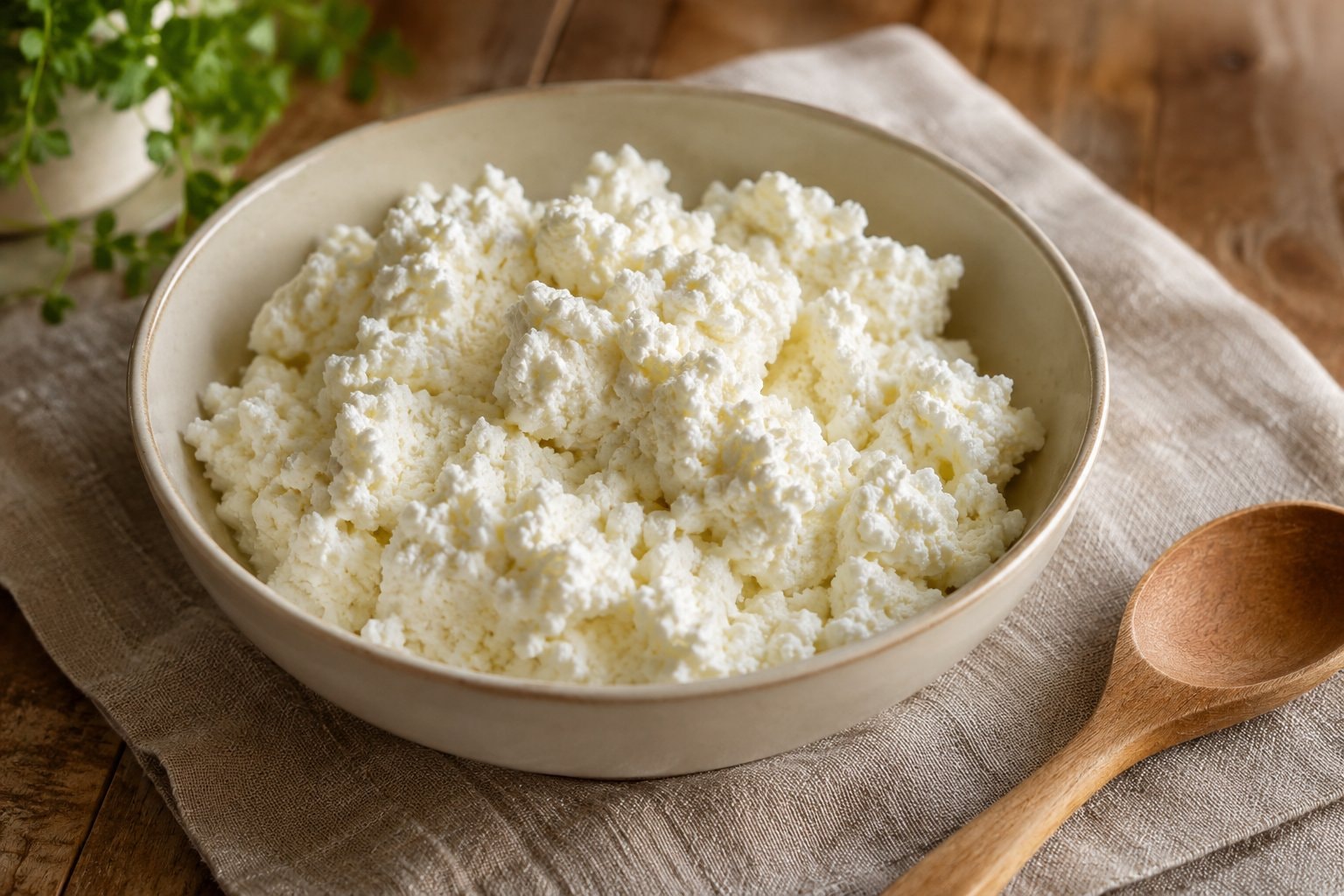
Wikipedia's ricotta account distinguishes its traditional use of whey from modern preparations using milk. This recipe makes a fresh whole-milk version, with pasteurized milk and lemon juice. Draining is kept gentle so the curds remain soft.
Ingredients
- 2 liters (8⅓ cups) pasteurized whole milk, not ultra-high-temperature milk
- 45 ml (3 tablespoons) fresh lemon juice, with 15 ml (1 tablespoon) extra if needed
- 3 g (½ teaspoon) fine salt
Method
- Line a colander with clean, damp cheesecloth and stand it over a deep bowl. Put the milk and salt in a heavy saucepan.
- Heat gently, stirring along the base, until the milk reaches about 90°C (194°F). Remove it from the heat and stir in the lemon juice with a few slow turns of the spoon.
- Leave the pan undisturbed for 10 minutes. Look for pale curds separated from a clearer liquid. If the milk still looks evenly milky, add the extra lemon juice and wait another 5 minutes.
- Lift curds into the lined colander with a slotted spoon. Let them drain for about 20 minutes for a soft result, or a little longer for a firmer texture. Avoid squeezing them dry.
- Transfer the cheese to a clean covered container. Cool promptly and refrigerate; use within 2 days. Discard the drained liquid after it has cooled enough to handle safely.